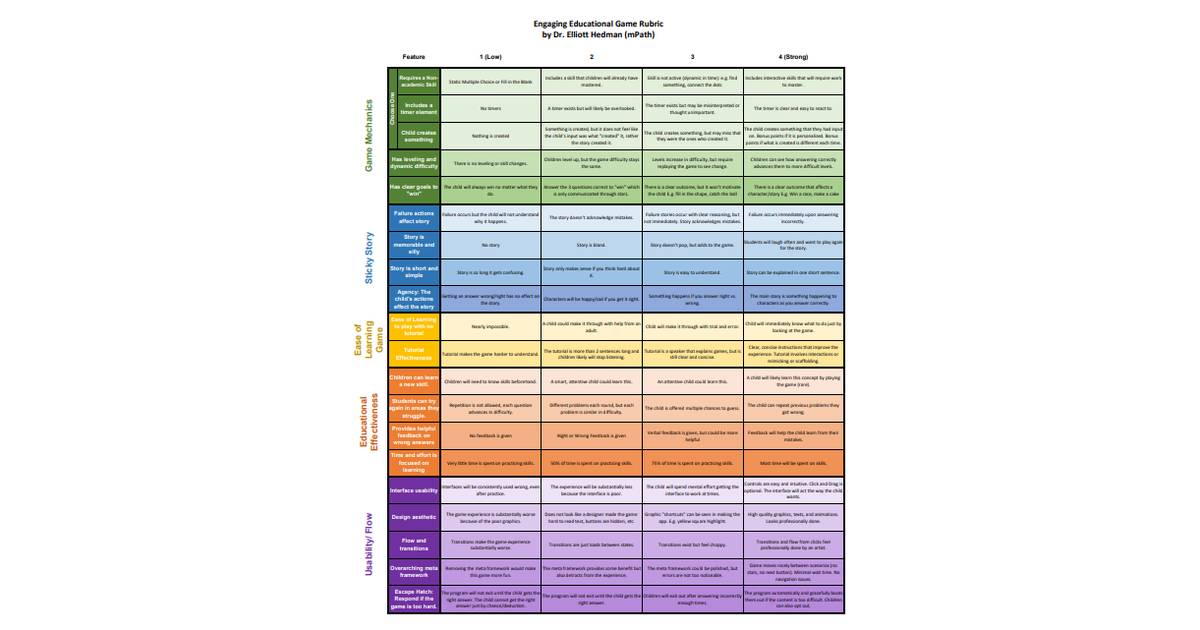
A Rubric for Making Engaging Educational Games
Most fail before kids even press play.
Most educational games fail because designers assume children will accept games they themselves wouldn't play.
Over the last 10 years, I've been hired to review and create educational games for many top educational and toy companies. Determining what makes educational games effective has been genuinely hard — not because the research doesn't exist, but because the assumptions are so deeply baked in.
When children have access to million-dollar commercial apps at home, educational games must compete on entertainment value. That's not a nice-to-have. It's the baseline.
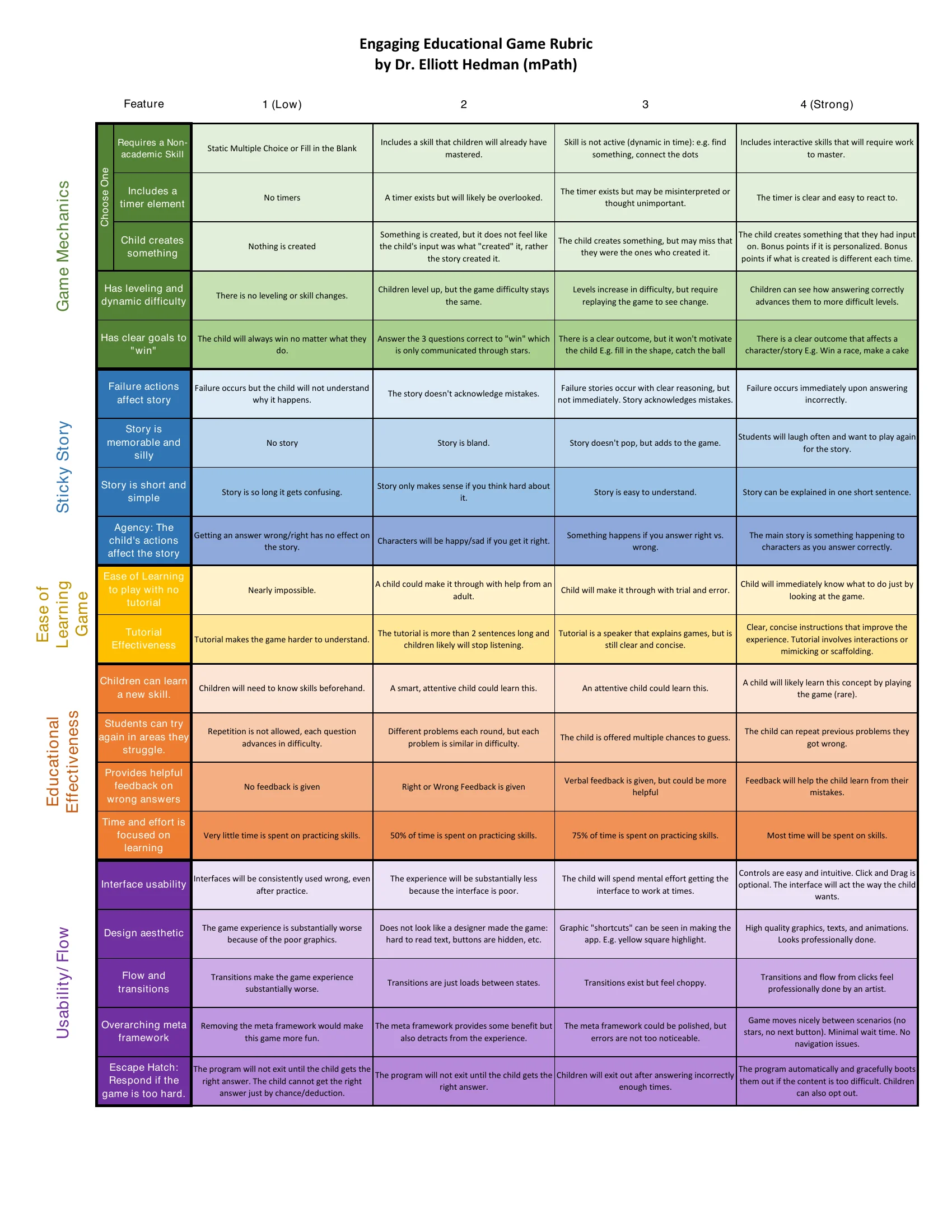
Here are the five foundational pieces that determine whether an educational game works — or gets abandoned after two minutes.
The 5 Foundational Pieces
Game Mechanics
Game mechanics drive both engagement and teaching effectiveness. A good educational game needs a clear winning goal and progressive difficulty. But beyond that, it needs at least one of these: a non-academic interactive skill that takes effort to master without causing frustration; a timing element children can overcome through effort; or opportunities for children to create something that reflects their own contribution — the hardest to design, and the most powerful.
Sticky Stories
Story matters — especially for younger learners. The best stories are memorable and slightly silly, easy to understand, and short enough that they don't collapse under their own weight. Two to three minutes total is the target. Critically, stories should acknowledge mistakes and connect them directly to the learning objective. The story isn't decoration. It's the vehicle.
Agency: The Child's Actions Affect the Story
Children's choices need to meaningfully affect the narrative — not just update a scoreboard. Characters in the story should visibly react to what a child does. A basic example: a character responds emotionally to a correct or incorrect answer. Even a simple emotional reaction closes the loop between effort and consequence, and that loop is what makes kids lean in.
Educational Effectiveness
Games should help children master new skills through repetition and multiple answer attempts with constructive feedback. The majority of time spent playing should be focused on practicing and mastering skills — not watching cinematics or navigating menus. Teachers introduce new concepts; games provide the practice support. Children love to learn, but they disengage fast when they can't actually get good at something.
Usability / Flow
The interface has to be intuitive, with professional-quality graphics, animations, and text. Transitions should feel polished without excessive loading times or clunky navigation. This one is easy to underestimate. A great game mechanic buried under a confusing UI is a game no one finishes. The experience of using the game is part of the game.
The Underlying Problem
Designers assume children will accept games they themselves wouldn't play. But kids have Roblox, Minecraft, and Fortnite at home. "Good enough for school" is not a bar that gets cleared.
Incorporating these five elements significantly increases game effectiveness for children's learning. Together, they form a rubric for evaluating whether a game is actually engaging — or just educational in the way that gets tolerated and abandoned.
The rubric isn't a formula. It's a set of honest questions to ask before shipping. Does the mechanic reward real effort? Does the story stick? Do children's choices matter? Does the interface get out of the way?
If the answer is no on any of them, kids will find out in about two minutes — and they won't come back.
Kids know the difference between a game and a chore. Build a game.
If this landed, forward it to a game designer or edtech team you know.
New essays on AI, education, and building things that matter.