Question Based Reading
What does it take to make a struggling reader lean in?
- Context
- MIT Media Lab PhD Research
- Sector
- Education, Reading, EdTech
- My Role
- Researcher & Designer
- Scope
- 300+ children across Boys & Girls Clubs and Title 1 schools
During my PhD at the MIT Media Lab, I watched hundreds of struggling readers do something that surprised me: they weren't failing to read because they couldn't — they were choosing not to. The words weren't giving them a reason.
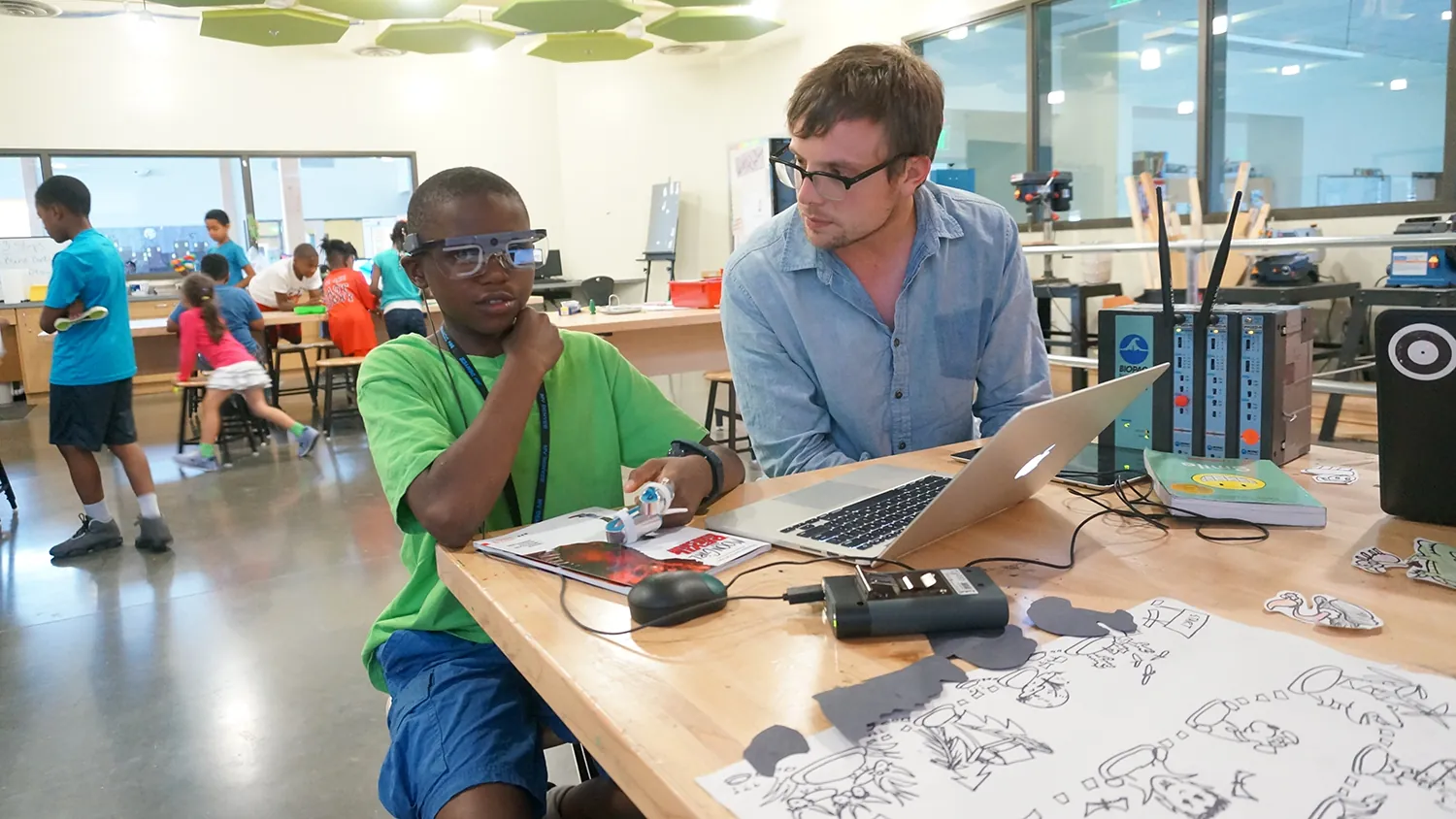
I spent years in Boys & Girls Clubs and Title 1 schools, strapping emotion sensors and eye-tracking glasses onto kids, watching what actually happened when a struggling reader sat down with a book. What I found changed how I think about reading entirely.
Ricardo and Dr. Dolittle
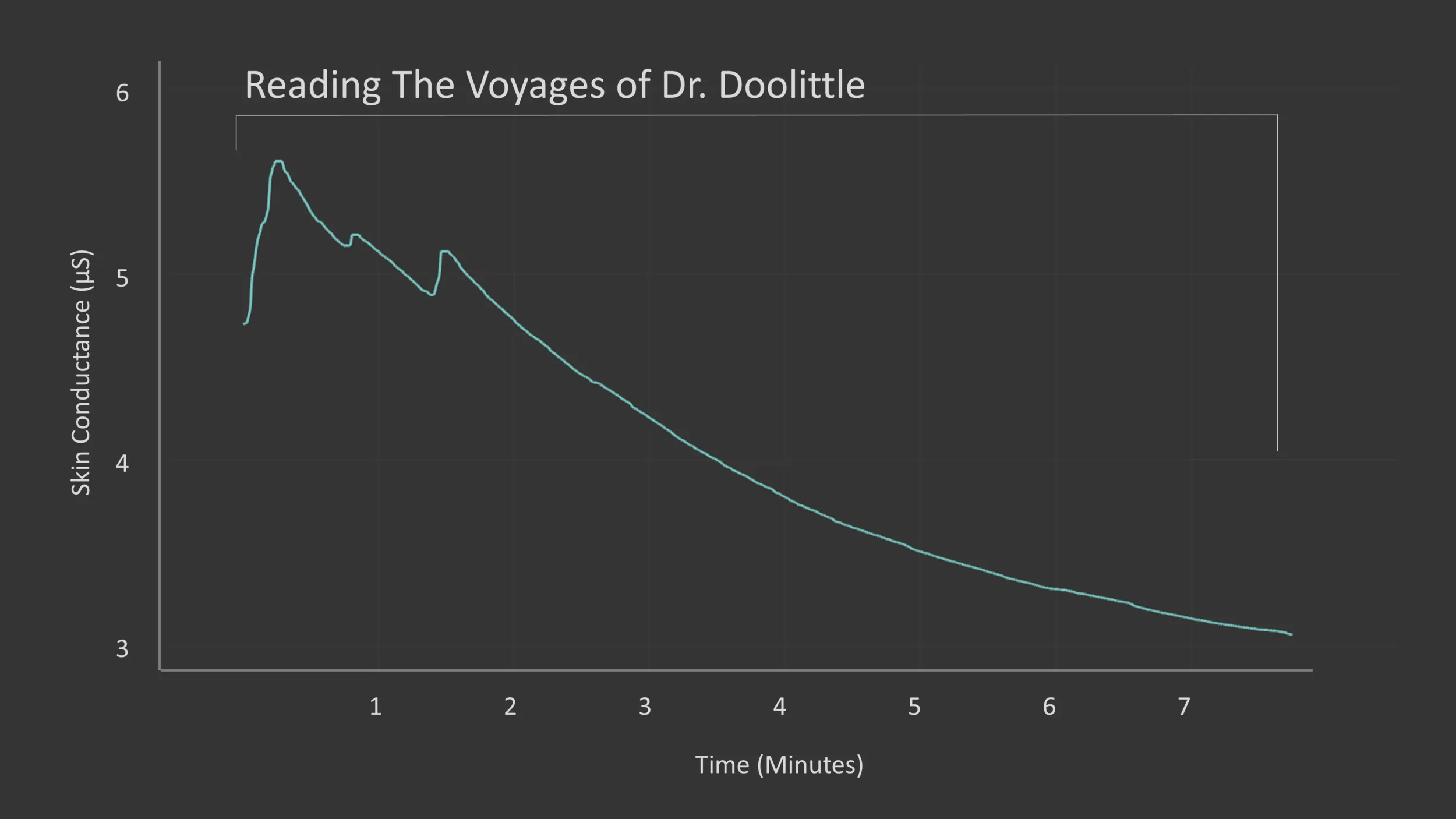
Ricardo was a bright kid. But when I put a copy of Dr. Dolittle in front of him, his skin conductance flatlined. His eyes scanned the page without stopping. He was physically present and cognitively absent.
This wasn't a reading problem. It was an engagement problem — and the book was failing him, not the other way around.
Struggling readers don't lack ability. They lack a reason.
The Same Kid, Different Book
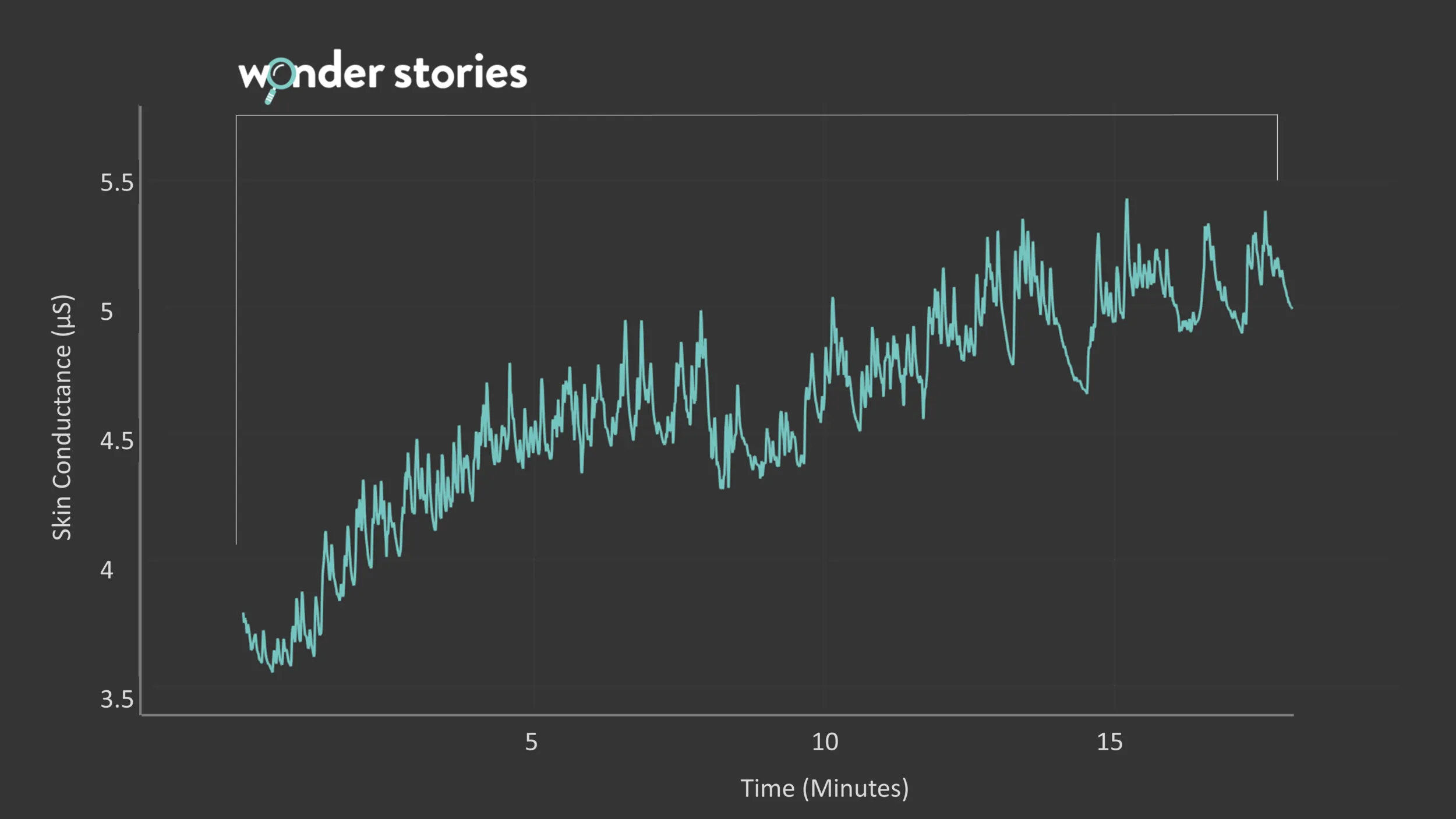
When Ricardo encountered a story built around a question he needed to answer — a mystery, a challenge, something at stake — everything changed. The emotion sensors spiked. The eye-tracking showed deep focus on every line.
He wasn't a different reader. He had a different reason to read.
His sensors lit up. He leaned forward. He wanted to know the answer.
Five Features of Question Based Reading
The sensor data pointed to five specific design features that consistently drove engagement in struggling readers. These became the foundation for Wonder Stories.
01 — Questions as the Engine
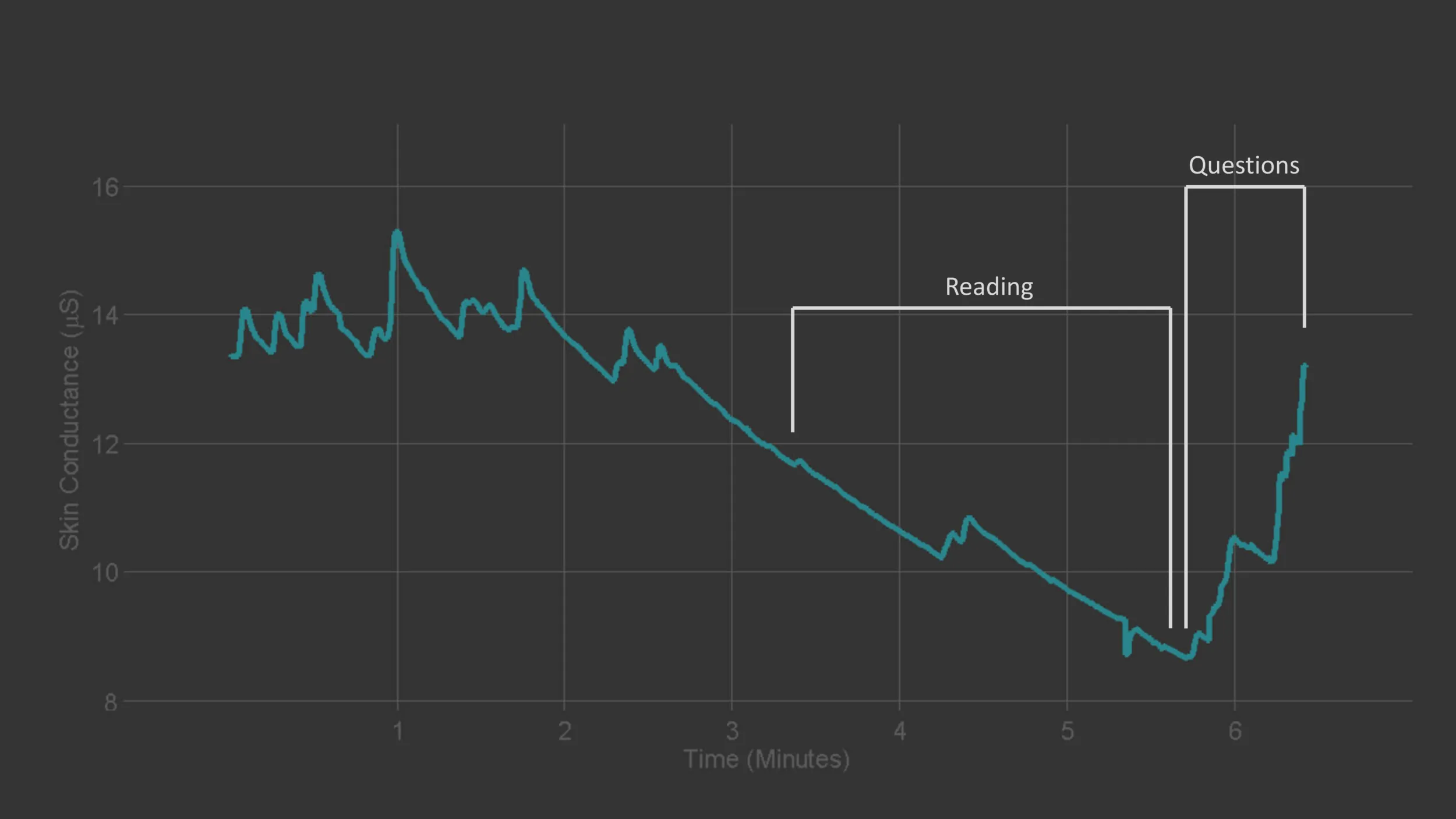
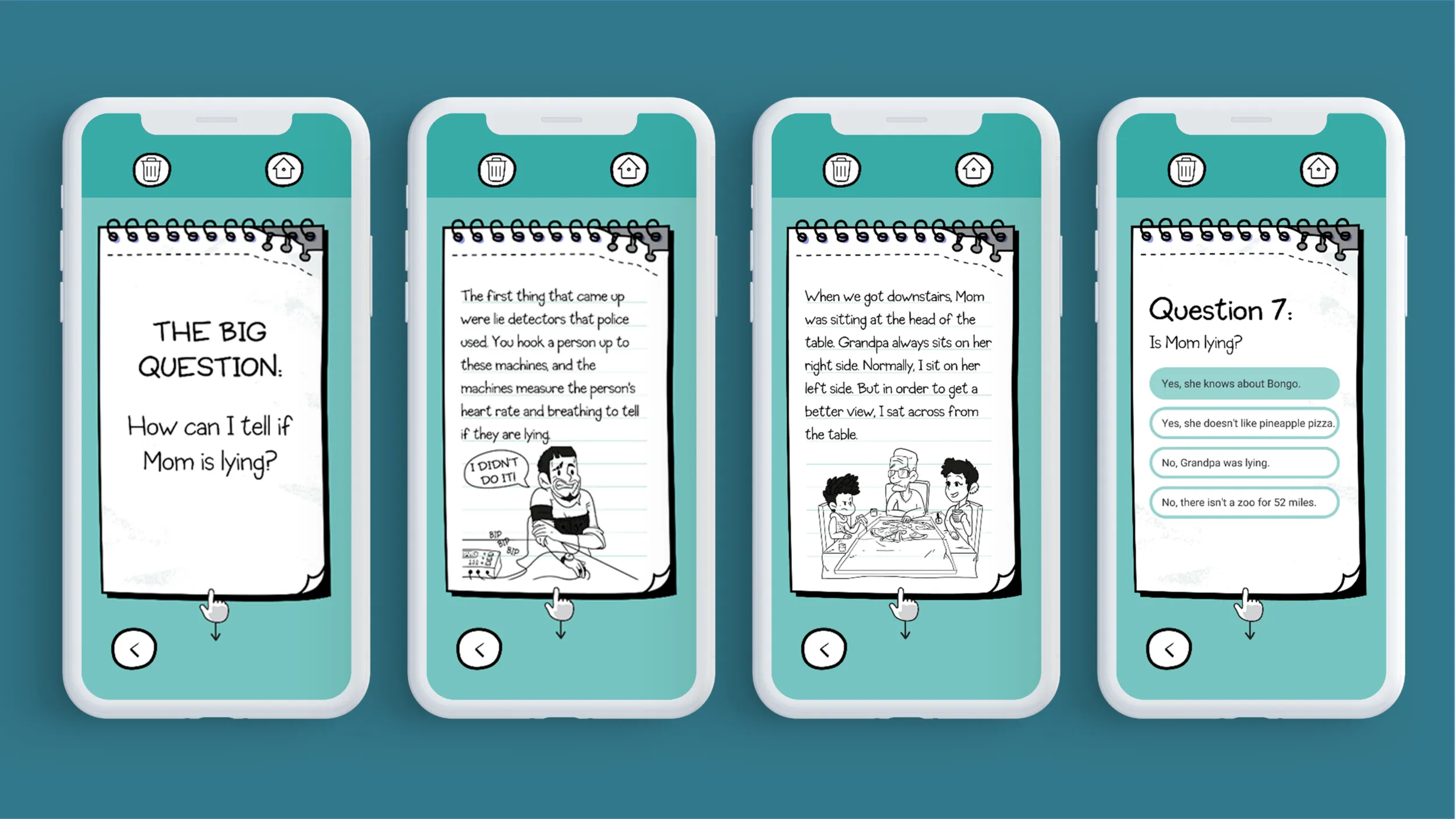
Eye-tracking revealed that struggling readers skimmed most text — but stopped cold at questions. The solution was structural: build entire stories around questions that readers must answer after reading each passage. Reading stops being passive. It becomes a mission.
Questions were a black hole for children's attention.
02 — Real Stakes, Real Stories
In Monkeys and Lies, a child is trying to figure out if his mother is lying — so he learns about lie detectors. The reading serves the curiosity. The story gives the question weight, and the question gives the reading purpose.
Emotion sensors showed stronger positive reactions when children felt genuine uncertainty about an outcome. The stakes had to be real.
Children leaned in when the answer actually mattered to them.
03 — Bite-Sized Reveals
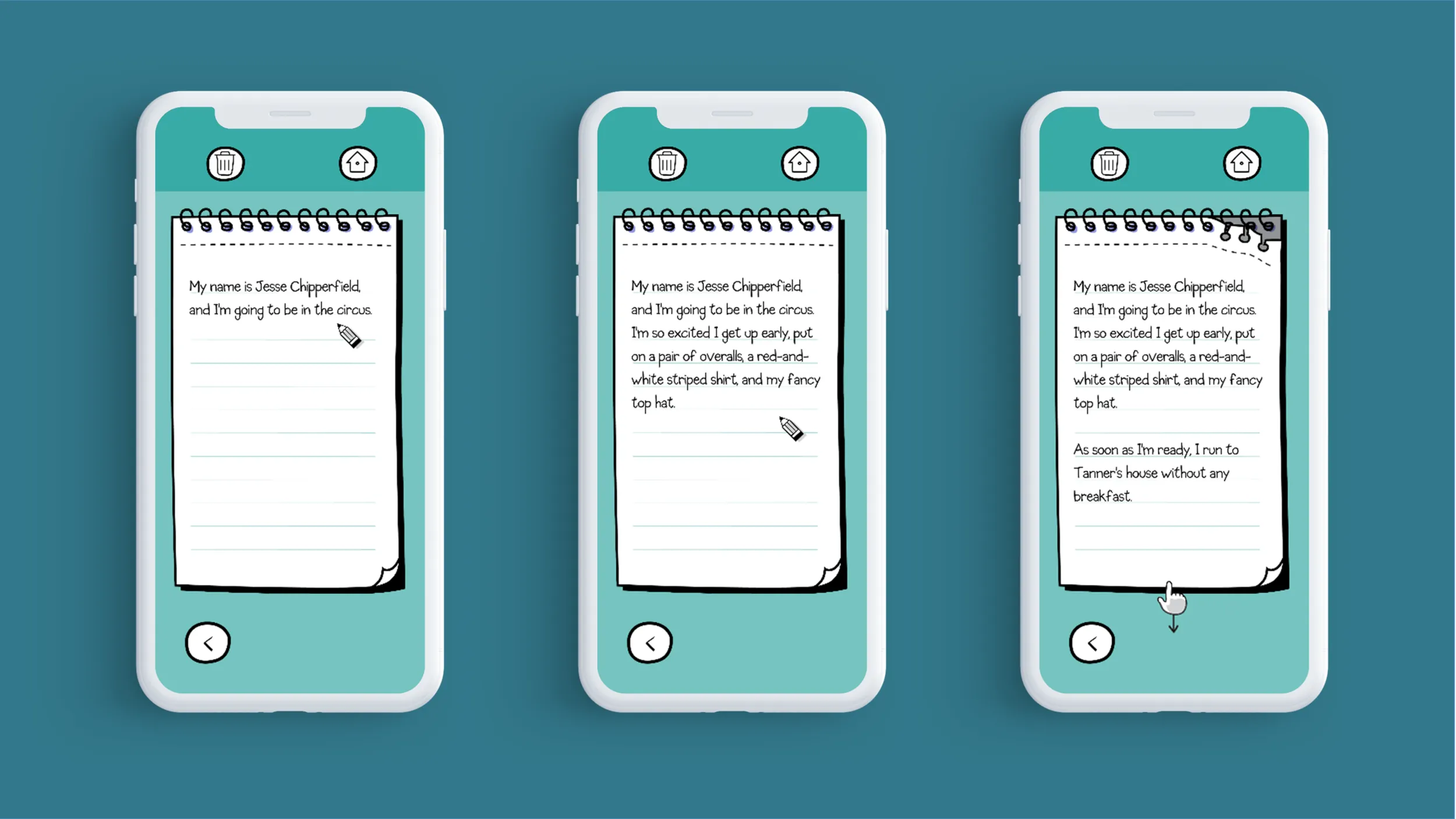
Eye-tracking showed that a full page of text caused early readers to shut down before starting. Wonder Stories presents text progressively — one or two sentences revealed per tap — making even a long book feel manageable. The scroll becomes a rhythm.
Full pages intimidate. One sentence at a time feels like a game.
Failure as a Hook
Rather than softening wrong answers, Wonder Stories signals failure directly — negative audio-visual feedback that stings just enough. Children consistently leaned in harder after a wrong answer, seeking redemption. Failure, handled well, is fuel.
Multisensory Engagement
Drawing from research on classical music accessibility, the app incorporated physical interactions (tearing pages), haptic feedback, and audio elements to maintain focus beyond text alone. Reading doesn't have to be a solitary, silent, still activity.
Key Insight
Reading can be engaging for all readers — we just have to rethink what the book looks like. The Gutenberg format was designed for adults with existing motivation. Struggling readers need something built for them from the ground up.
What the Data Showed
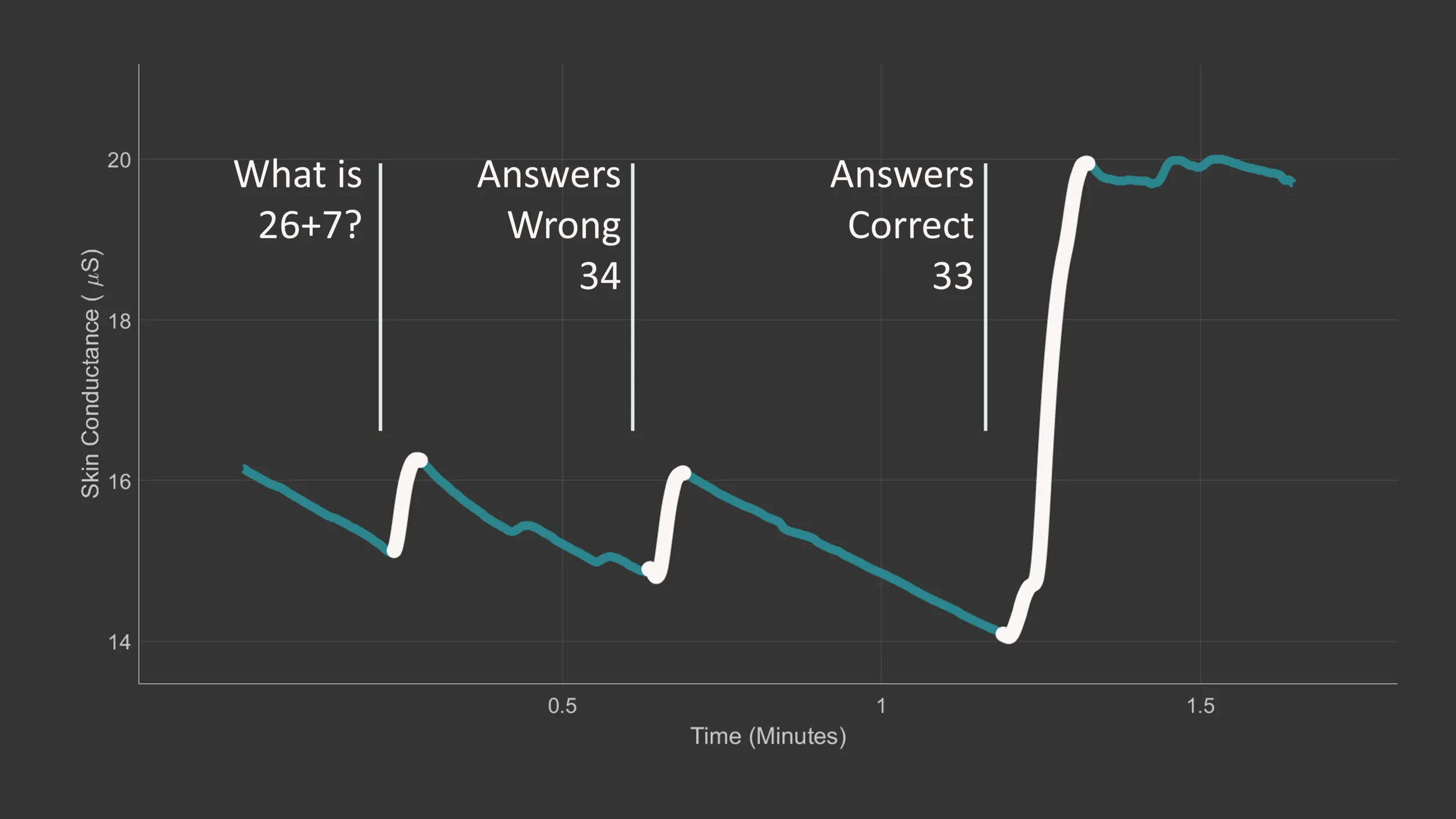
Across hundreds of children, question-based reading produced measurably higher engagement — sustained focus, positive emotional response, and children voluntarily continuing to read past the required sections.
The kids weren't broken. The books were.
"Reading can be engaging for all readers — we just have to tweak what the book looks like from the days of Gutenberg."
Struggling readers don't need more phonics drills. They need a reason.
If this landed, forward it to a teacher or literacy researcher you know.
New essays on AI, education, and building things that matter.