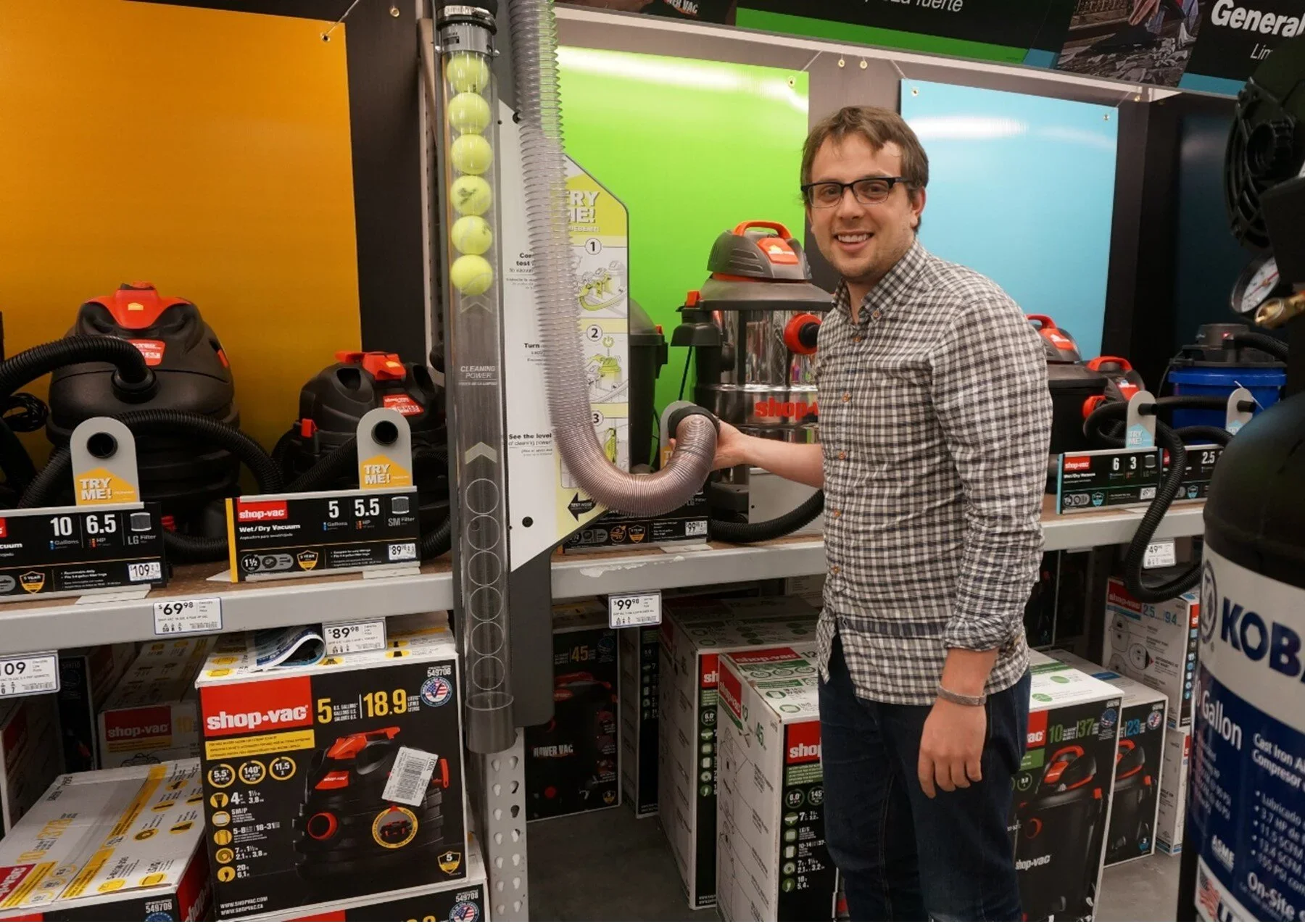
How a Tennis Ball Increased Lowe's Vacuum Sales by 9%
The problem wasn't the vacuums. It was that customers didn't feel confident enough to buy one.
- Client
- Lowe's
- Sector
- Retail, In-Store UX
- My Role
- Research Lead
- Method
- Fake store prototype + MOXO sensor tracking
Lowe's hired mPath to reinvent the experience of buying a wet-dry vacuum. mPath conducted diagnostic research and emototyping to understand the current experience and develop a new approach that increased purchases, customer retention, and value.
The overarching theme in our design work was that shoppers were not feeling confident that they were making the right choice in their purchases.
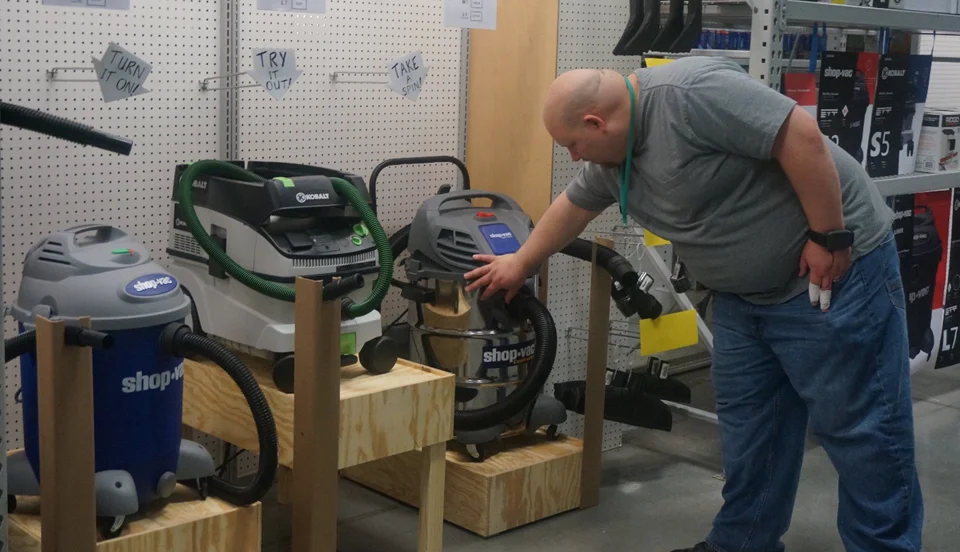
We built a fake vacuum store and had shoppers visit in the morning, making changes in the afternoon.
Three Things That Changed
Simplify Messaging
Boxes and signs had many unorganized messages and information. Shoppers were so overwhelmed they couldn't read any of it, let alone stop to touch.
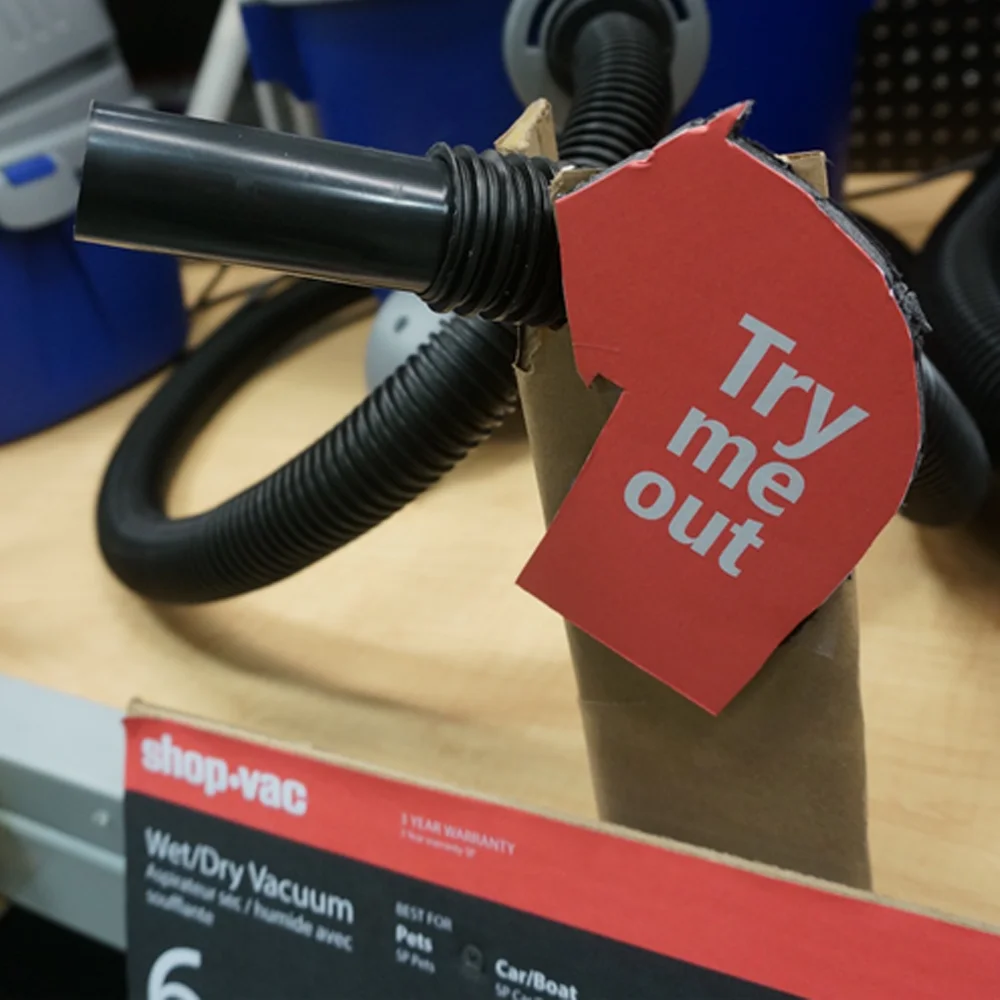
The number-one question we identified from new shoppers was "Which one should I use at home?" We placed a label above boxes and displays: "Best vacuum for home use." We also placed a large, red, pop-up arrow next to the vacuum, saying "Try me out," achieving our primary goal of getting shoppers to touch the products.
Add Interaction
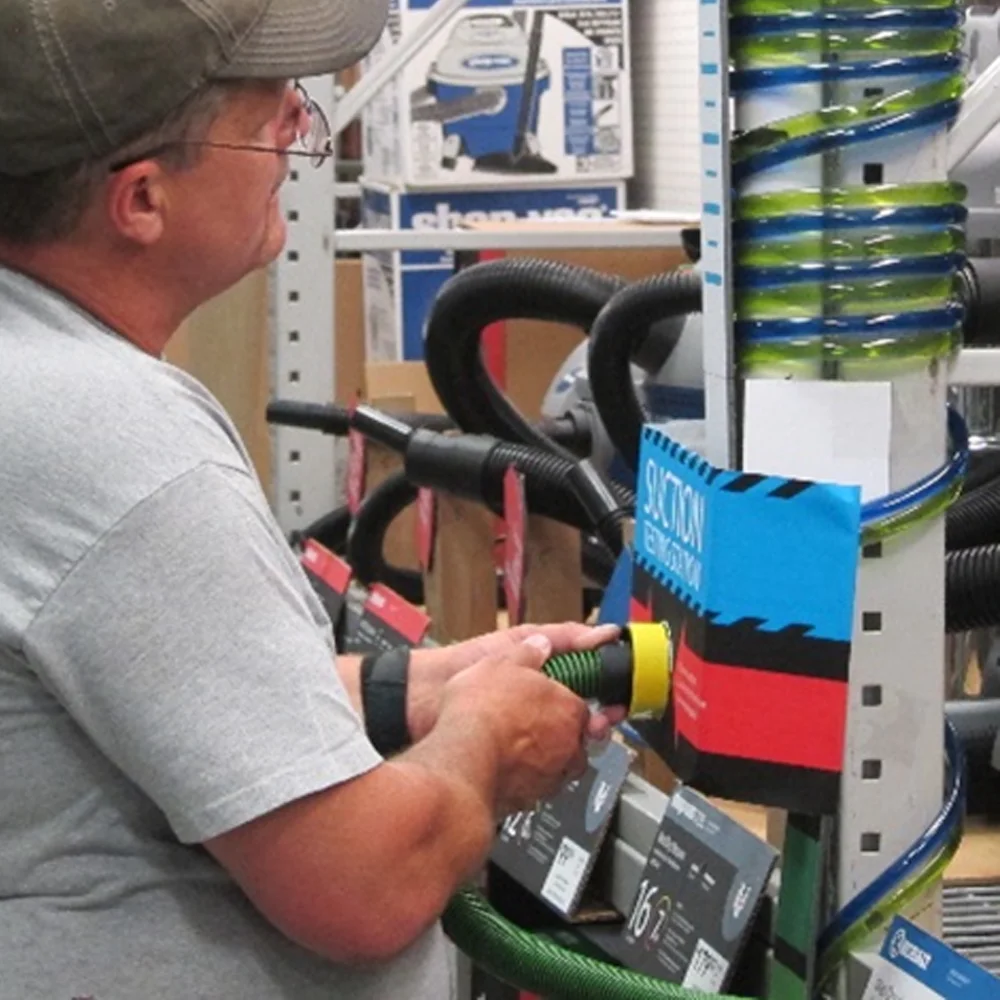
We addressed what people originally asked for: professional design, simple messaging, accessible products, and differentiable choices. After implementing all of these features, the space was still only rated 5/10.
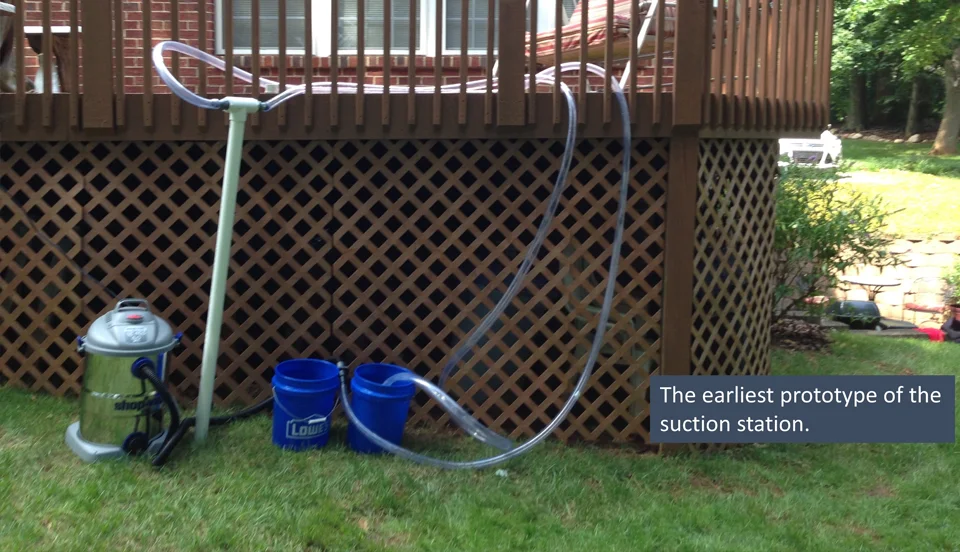
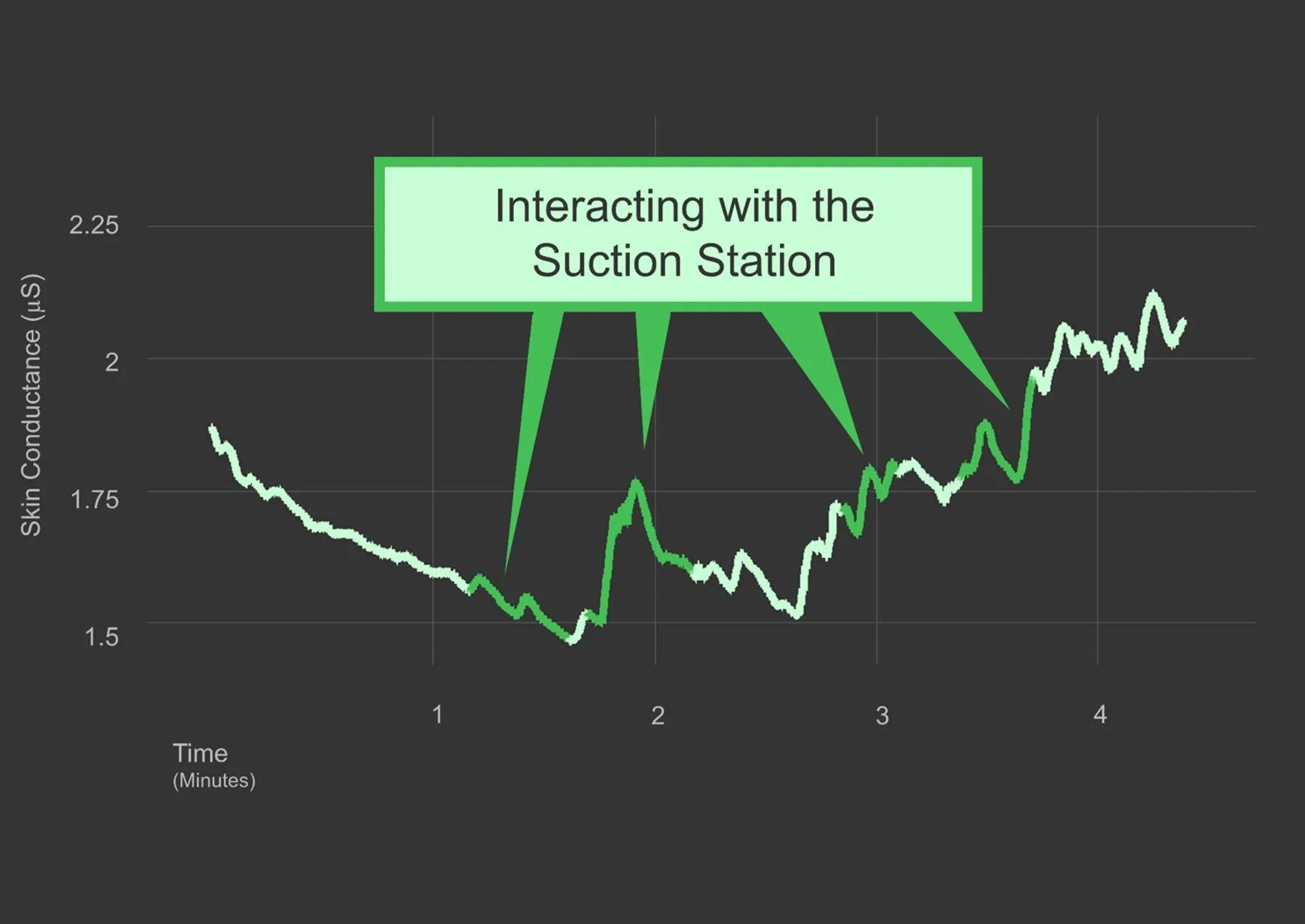
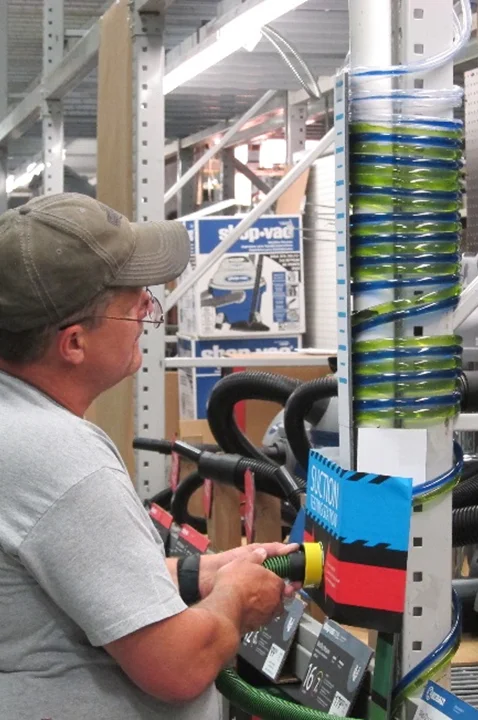
We noticed that most shoppers subconsciously put their hands on every vacuum to feel the suction, but all the suctions felt the same. We installed a tube with tennis balls to help customers visualize the suction; they rated the experience as the best they ever had at Lowe's.
Over the weekend, we experimented with suction physics to see how we could better visualize horsepower.
Simplify Choices
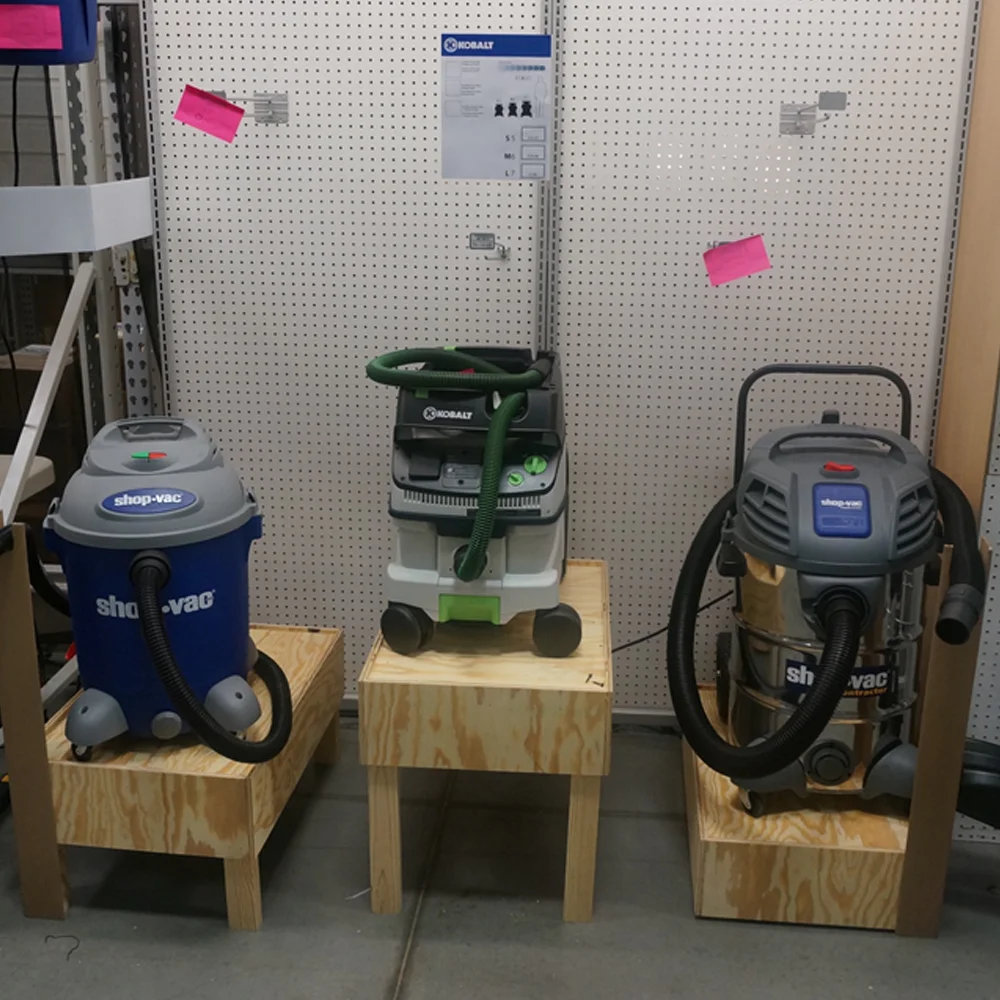
Interviewed shoppers were expecting one wet/dry vacuum. Instead, they had to evaluate and choose between 14 different options. They could not differentiate between these options.
We found that shoppers differentiated vacuums based on their storage size: small, medium, and large. They expected all vacuums to have strong suctions and similar accessories. For wet-dry vacuums, they tend to be indifferent to the brand.
If you visit the Lowe's store today, you can see the tennis ball suction station ready for play.
Lowe's implemented over 150 of mPath's design suggestions and conducted an in-store, randomized control test. According to the results, mPath helped Lowe's increase their sales by over 9% and increase customer satisfaction and promotion.
If this landed, forward it to someone designing retail or purchase experiences.
New essays on AI, education, and building things that matter.