From "I Won't Read a Paragraph" to "Can We Play Again?"
The same kids. A different reading experience.
- Client
- Boys & Girls Club
- Sector
- Education, Literacy, After-School
- My Role
- Research Lead & Literacy Instructor
- Scope
- 3rd and 4th grade reluctant readers
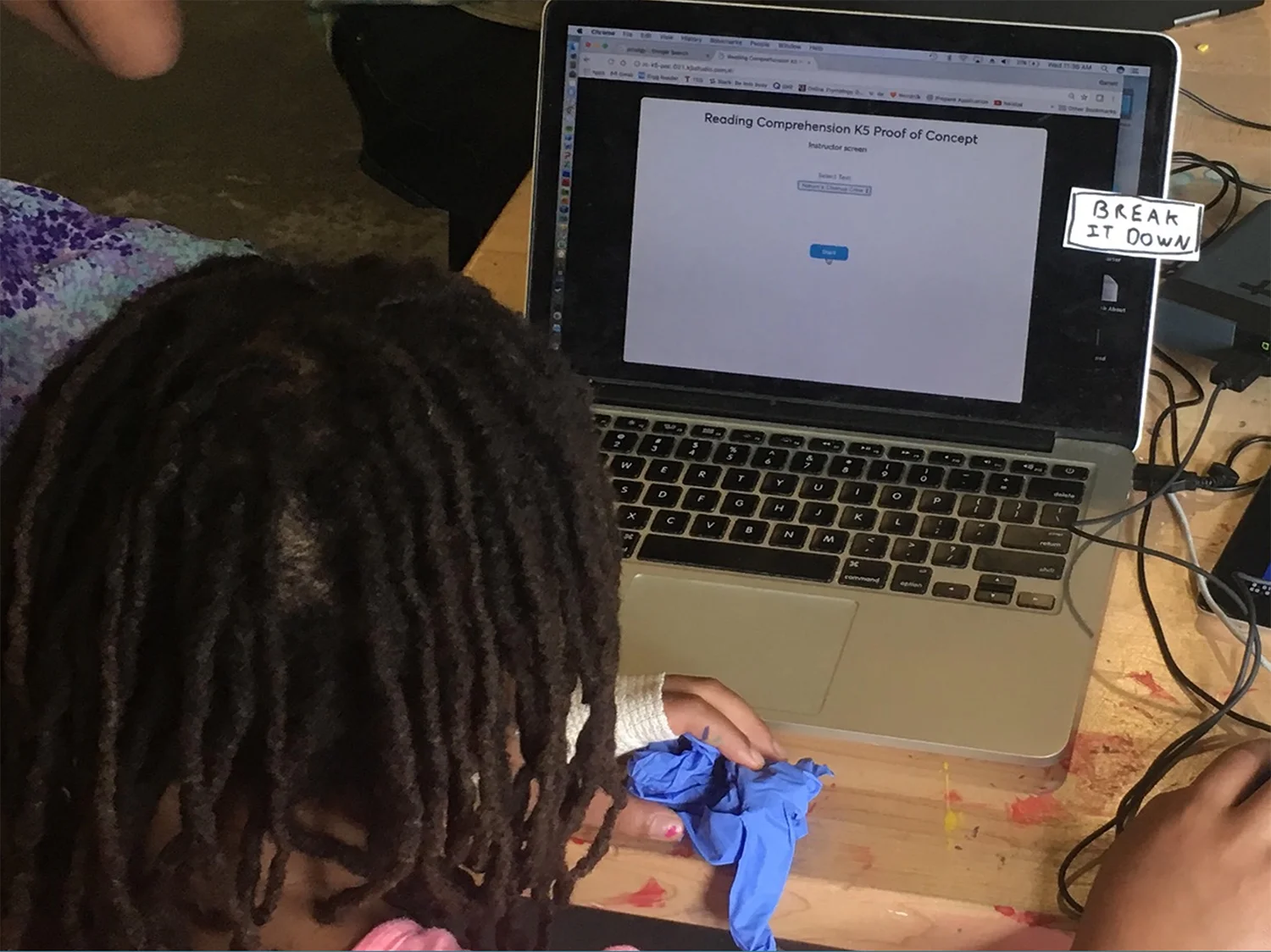
We worked at the Boys & Girls Club to provide reading lessons for 3rd and 4th graders that reluctant readers would engage with, care about, and actively ask to do.
Many of these students would not even read one paragraph from our initial prototype.
These were third and fourth graders who had, over years, learned that reading was something that happened to them — not something they did. Handing them a digital reading lesson and asking them to engage was like asking someone who's been burned by a stove to try cooking again. The first ask was the hard one.
The last prototype looked different. Students were actively reading every line, paying attention to feedback, and asking — without any prompting — if they could do it again.
Same kids. Different experience.
Three Changes That Flipped the Experience
Add Weight to the Questions
In our initial reading tests, students seldom cared if they answered a reading question wrong. Consequentially, they did not read the text nor spend much time on the question. Most of the students skipped their grade at the end.
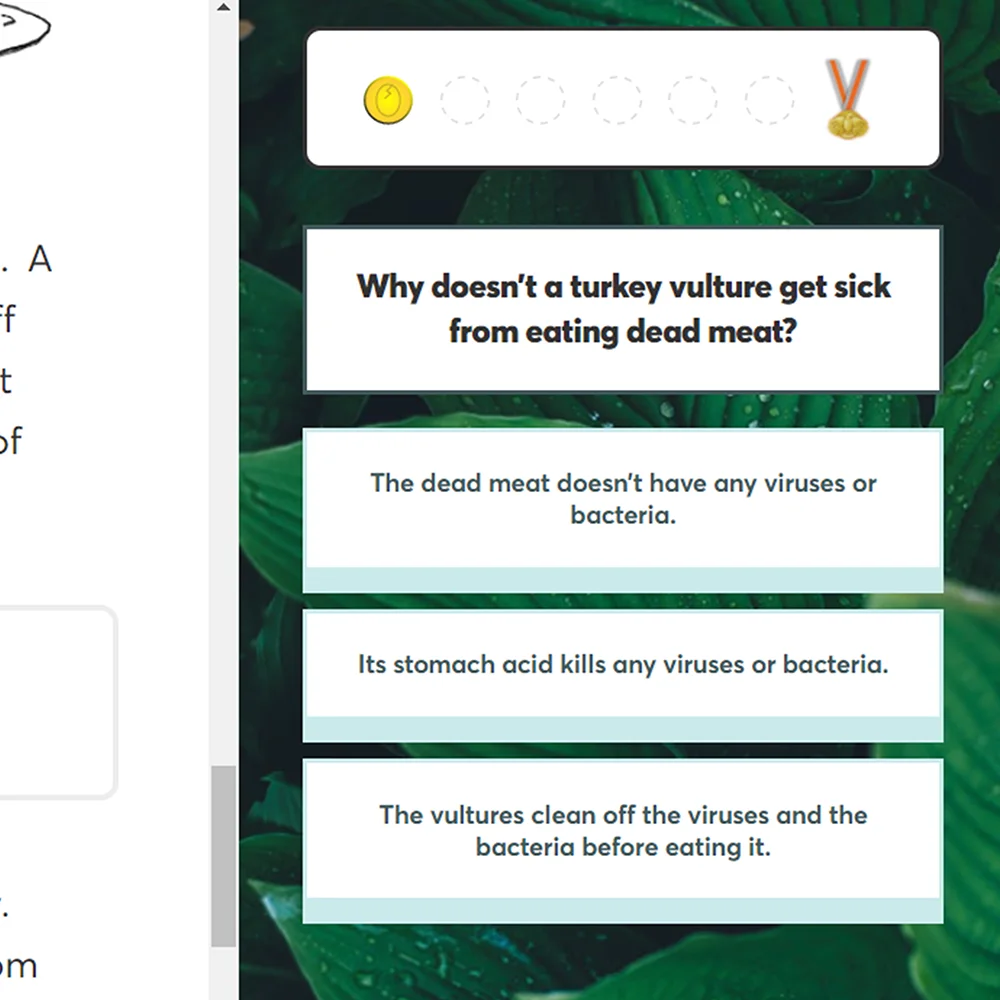
Students were offered a coin for every problem they got right within 2 guesses. Students would re-read sections and think carefully, knowing this coin was on the line. Later research showed that this coin was a strong indicator of achievement and added weight to problems.
With all the right motivators and rewards in place, children started asking us for help answering questions, which was our ultimate goal. In this prototype, we added the "Break it Down" button.
Remove the Visual Clutter
Through eye tracking, we saw children would often skip over the text and focus on questions which were more engaging. Vibrant images also pulled children's attention away.
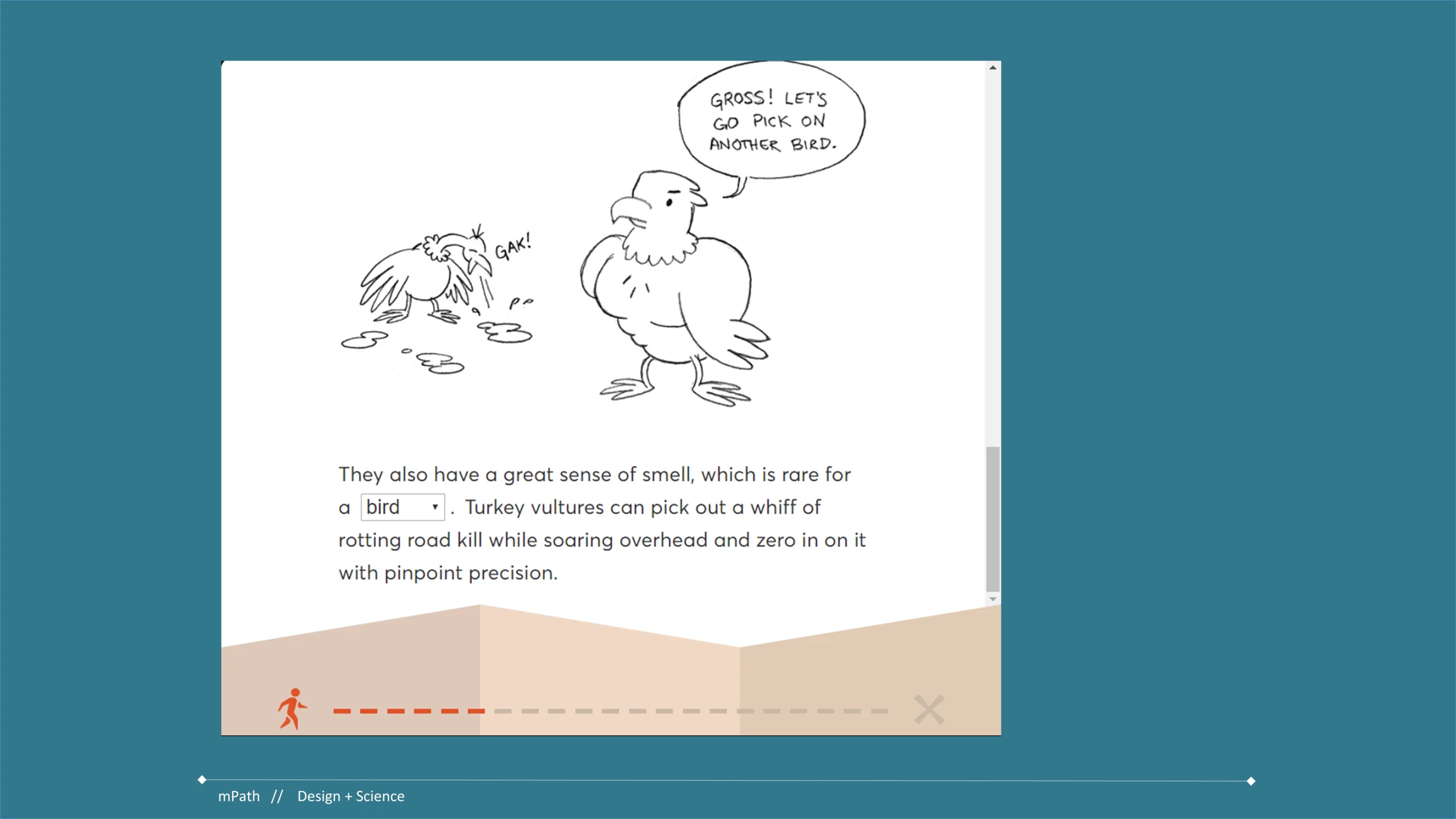
Inspired by the app Hooked — we removed all visual distractions — there were only one to two sentences visible at a time. Questions and images only appeared once children finished reading texts. This simplification helped children ease into reading and stay focused.
We added simple cartoons like "Diary of a Wimpy Kid" as it helped kids reflect on what they read and not feel overwhelmed.
Start with a Wonder Question
Children seldom had a reason to read a text other than to finish as fast as possible. Questions were present just to "prove that they read it." While adult readers often read for enjoyment, struggling readers did not enjoy reading the preselected texts given to them.
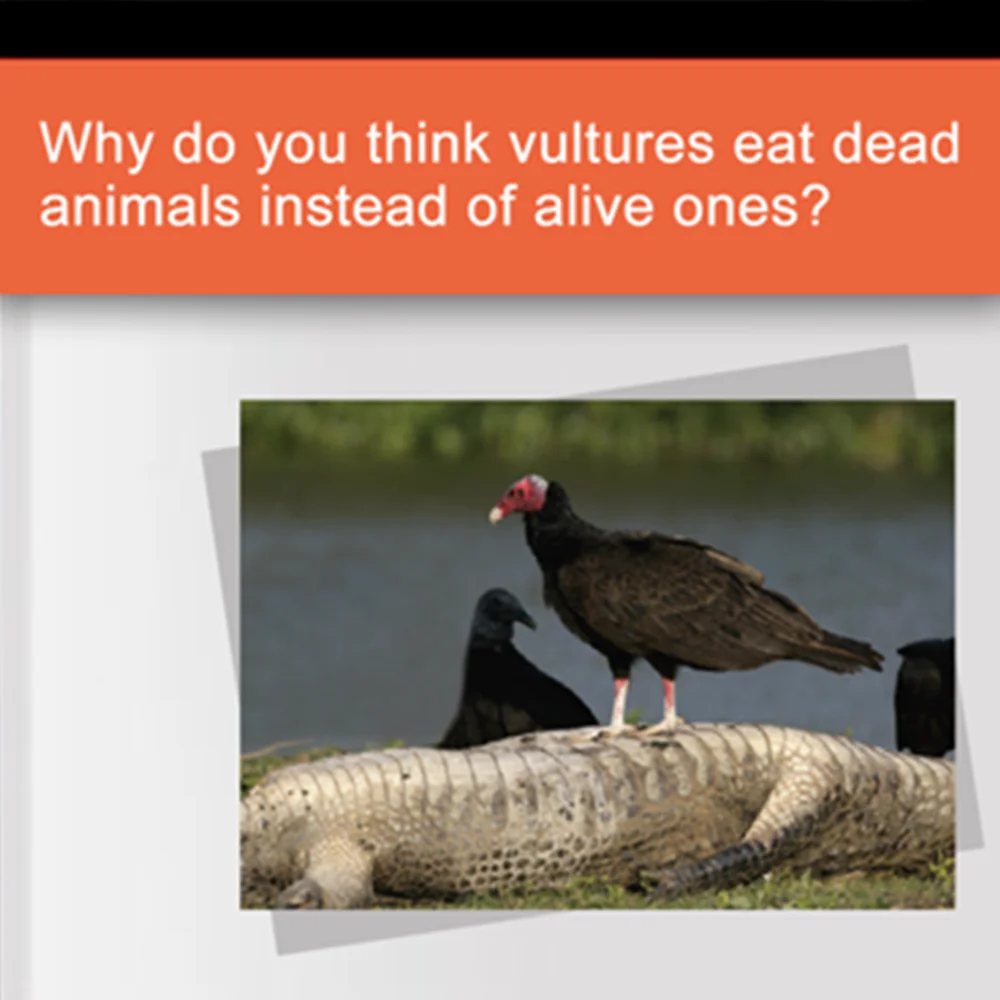
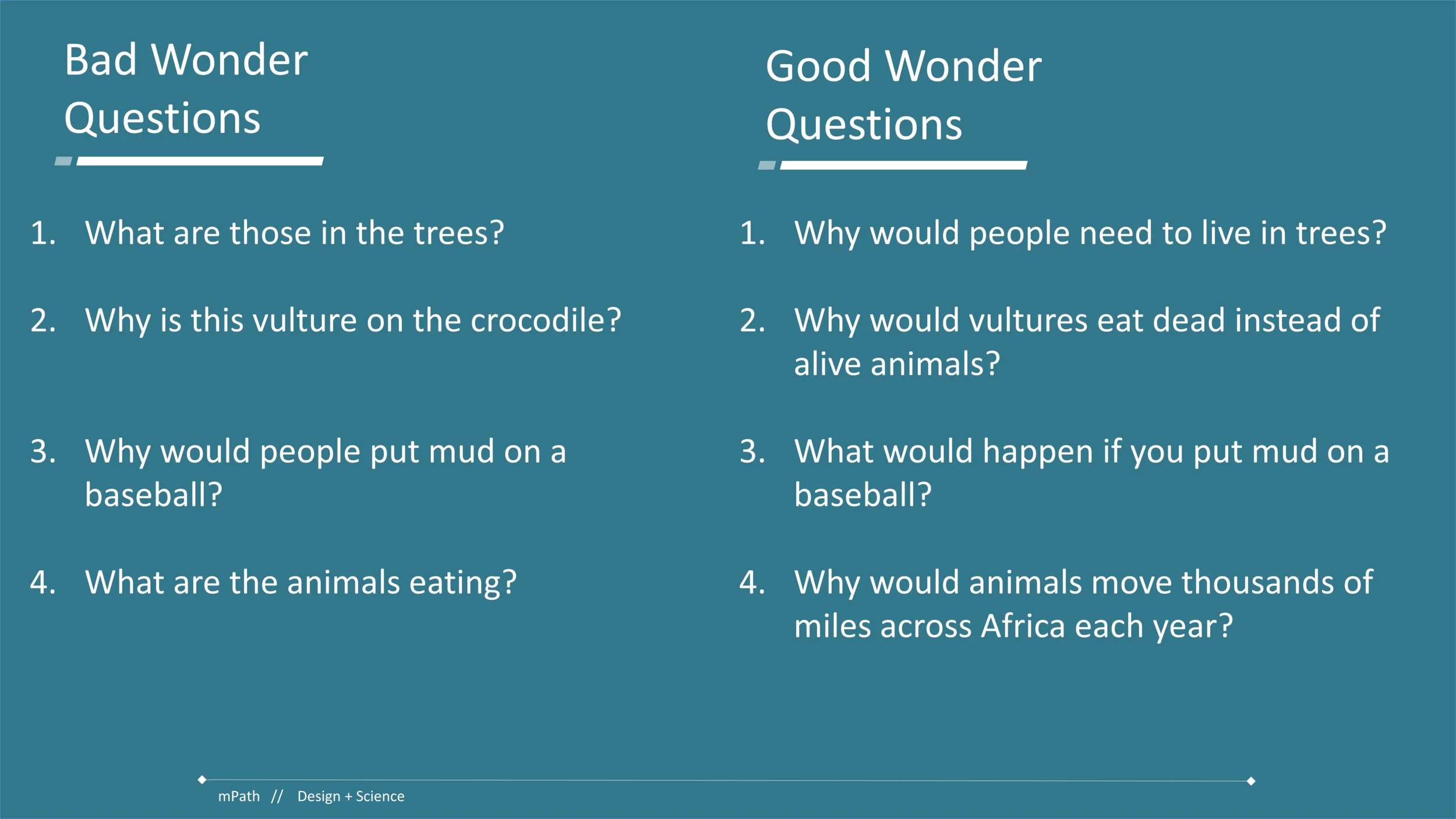
We added a key Wonder Question at the beginning of every text. For example, "Why do vultures eat dead animals?" We then had readers ask a neighbor the same question. This instilled in readers a sense of purpose and curiosity as they read the scientific text. At the end they were able to show they were able to answer the challenging question.
We found children were more engaged and answered faster when talking with each other rather than typing.
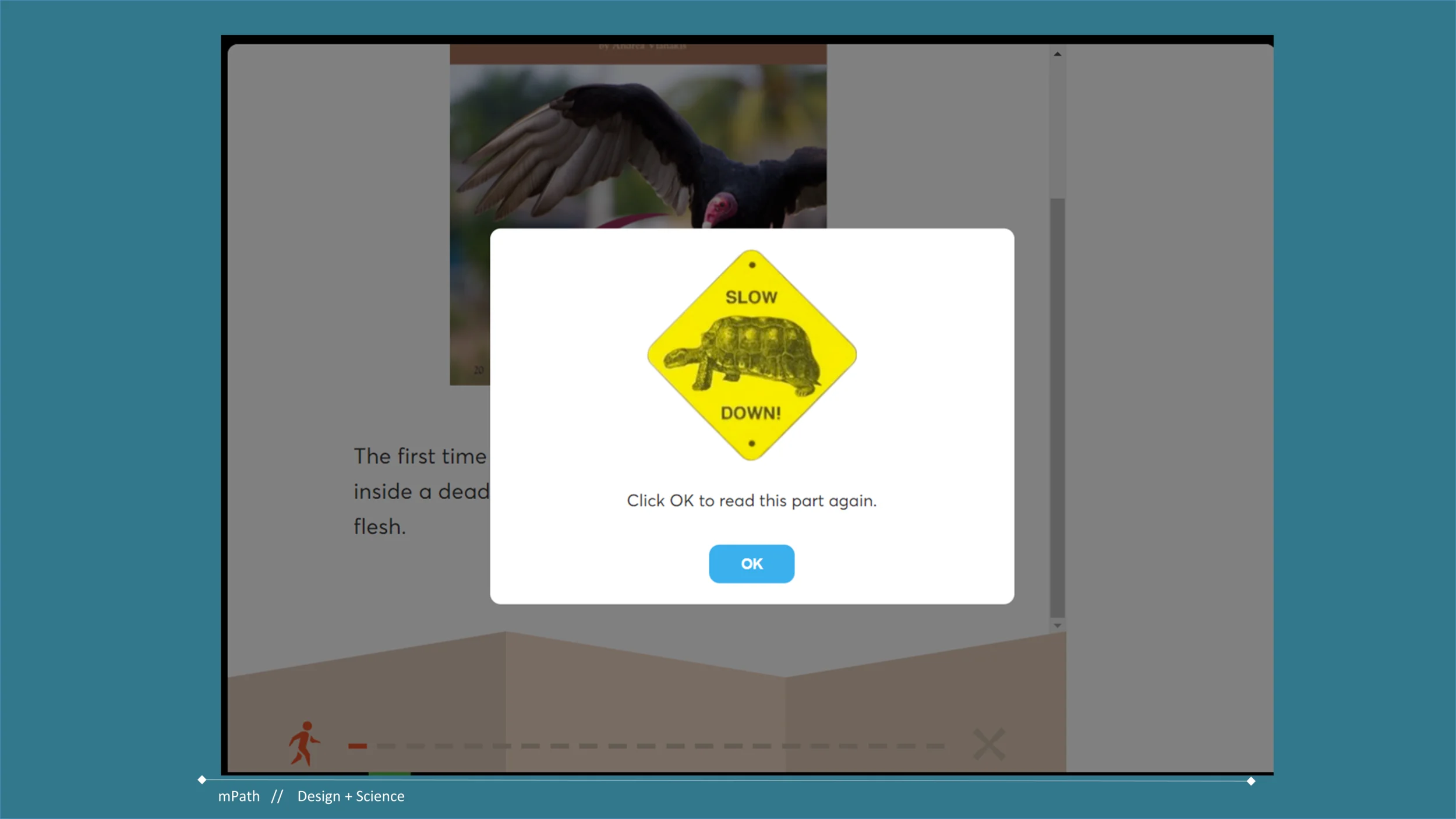
We alerted kids when they were skipping past the reading. Rather than be annoyed, children said reported that they really appreciated knowing they weren't reading as they were unaware themselves.
When providing Wonder Questions, we quickly found out that some questions were more fun and interesting than others. A rule of thumb — if you, an adult, already know the answer, it's probably not that fun.
Games are usually added as a reward. We found games were more effective if children could play one before they started reading. This helped them warm up their mind and get engaged with the material.
Other Things We Learned
Peer conversation before reading consistently outperformed individual prompting. Skip alerts — notifications that a student had bypassed text — were welcomed, not resented: kids actually appreciated being caught. Pre-reading games were more effective than post-reading rewards. And the best Wonder Questions were ones that adults couldn't answer from general knowledge — questions that genuinely required reading to resolve.
The kids who refused to read a paragraph in prototype one were the same kids asking to play again in prototype three. Nothing changed about who they were or what they were capable of. What changed was the experience we put in front of them.
This work became the foundation for Wonder.io — the app we built to give reluctant readers a reading experience designed around how they actually behave, not how we wish they would.
The kids weren't the problem. The reading experience was.
If this landed, forward it to a teacher or literacy researcher you know.
New essays on AI, education, and building things that matter.