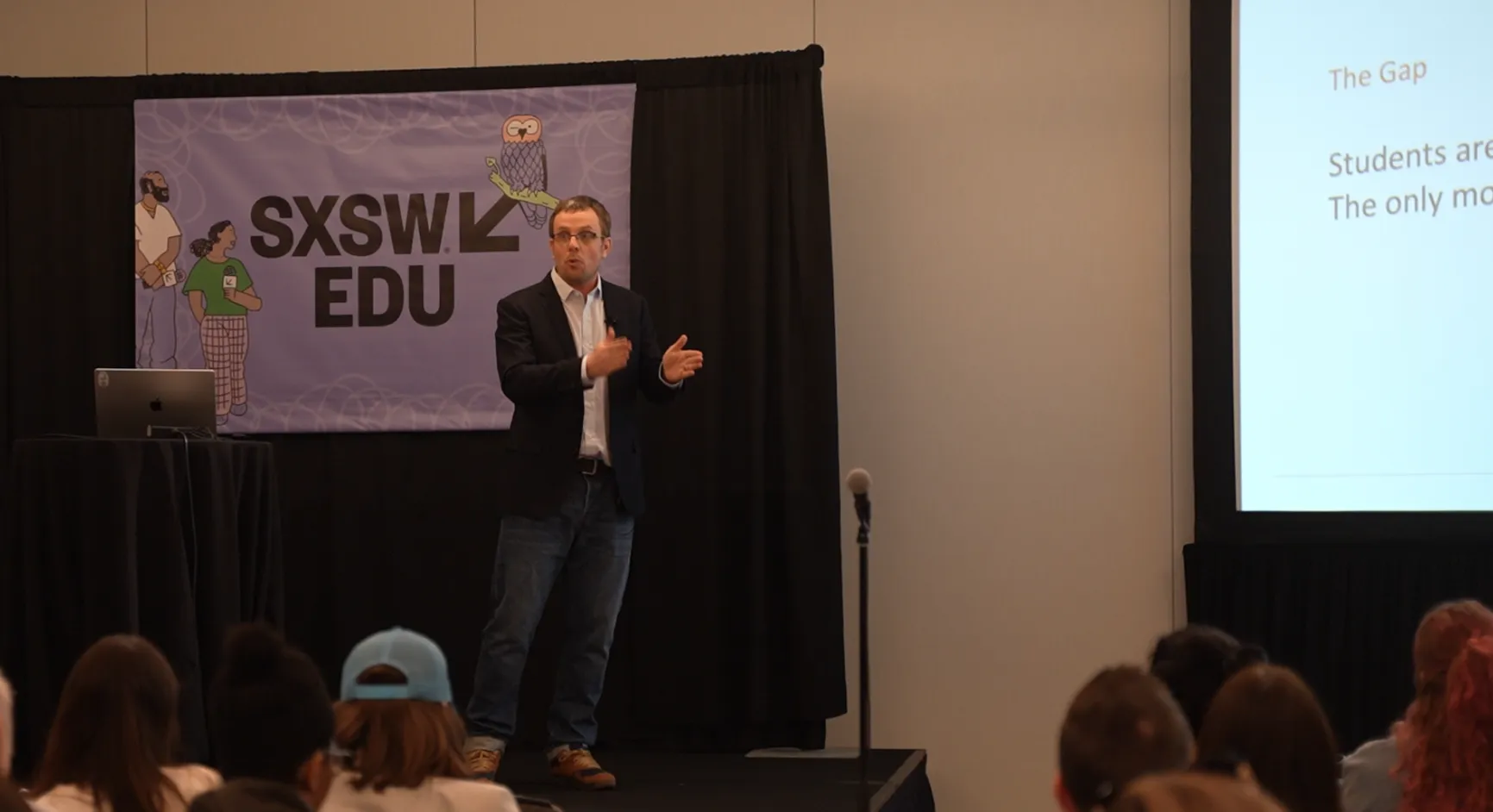
SXSW EDU — on how students actually use AI
The Most Important AI Skill Isn't Prompting. It's Asking for Help.
Why learning with AI depends less on better prompts than better learners.
I grew up in a rural Colorado town. We would drive two hours to every high school basketball game. I'd put on my uniform, drink my Gatorade, and then I'd just sit. For ninety minutes, I watched my teammates play while basketball shoes squeaked back and forth across the gym floor. It was the worst experience of my high school years.
Looking back, the strange part wasn't sitting on the bench. It was that I never asked my coach what I needed to improve. I blamed my lack of playing time on being tall and uncoordinated. I was missing something much more important: asking for help is a skill.
Academic help-seeking is one of the core behaviors of self-regulated learning. Students who learn to recognize what they don't understand, seek the right kind of help, and apply feedback consistently become stronger learners; not because they're smarter, but because they've learned how to learn (Karabenick & Newman, 2009; Zimmerman, 2002).
When learning with AI, asking for help may be the most important skill of all. Today, I'd walk into that same gym with an AI tutor in my pocket. I could ask, "What would it take for me to earn more playing time?" But I probably wouldn't.
Students make that same choice every day. They could ask AI to explain a confusing paragraph, quiz them until they master a concept, or coach them through solving a problem. Instead, many ask it to write the paper or answer the homework.
Over the past year, I interviewed and coached dozens of students about how they were using AI. I expected to find students intentionally cutting corners. Instead, I discovered something more interesting: students weren't inventing AI habits. They were inheriting them.
Friends, roommates, cousins, and classmates showed one another prompts. Almost everyone knew how to get ChatGPT to finish schoolwork faster. Almost no one knew how to ask it to challenge their thinking or teach them something they didn't understand.
The pattern made perfect sense. Teachers assign essays, questions, and worksheets. Students ask AI to produce essays, answer questions, and complete worksheets. The assignment rewards producing the work, not becoming better at the work.
Then I coached Victor
Victor was a ninth grader in Ukraine. When I asked what he struggled with most, he answered immediately. "I'm just bad at commas."
He was already using ChatGPT. His prompt was simple: "Put the commas in for me." His homework came back with perfect punctuation. His writing tests did not.
I suggested one small change. Instead of asking, "Put the commas in for me," we prompted together, "Teach me how to use commas."
“Put the commas in for me”
- ChatGPT edits his writing for him
- Homework comes back with perfect punctuation
His writing tests didn't improve.
“Teach me how to use commas”
- Generates practice sentences and quizzes him
- Challenges his reasoning, gives immediate feedback
- Gradually increases the difficulty
He owns the skill.
ChatGPT stopped editing his writing. It generated practice sentences, asked Victor where commas belonged, challenged him to explain his reasoning, gave immediate feedback, and gradually increased the difficulty. At the end, it recommended fifteen minutes of practice every day.
"I didn't know ChatGPT could do that."
Victor looked up at me. He didn't know ChatGPT could do that, and neither did most of the students I interviewed.
Learning scientists distinguish between asking someone to solve a problem for you and asking for help learning to solve it yourself (Roll et al., 2011). Victor had unknowingly switched from one to the other. Instead of producing the answer, ChatGPT became his tutor. That single shift transformed AI from a productivity tool into a learning tool.
A randomized controlled trial at Harvard found that students learned significantly more from an AI designed to teach than from a traditional active-learning lesson, suggesting AI is most effective when it guides explanation, feedback, and practice rather than simply generating answers (Kestin et al., 2025). Good teachers make that shift automatically. AI can support many of those same coaching behaviors, but unlike a great teacher, it usually waits for the learner to ask for them.
I expected students to resist this intentional learning approach because it requires more effort than asking AI to write the paper. Instead, they became excited. They wanted AI to quiz them, challenge them, coach them, and help them understand concepts they'd struggled with for years. They weren't rejecting learning. They were discovering a way to own it.
That reaction. "I didn't know it could do that." That's what I keep trying to recreate. I've made it my goal to sit down with one person each week, someone trying to solve a real problem, and build something small with them. If you want to follow along, I'll share what I find.
Follow the builds →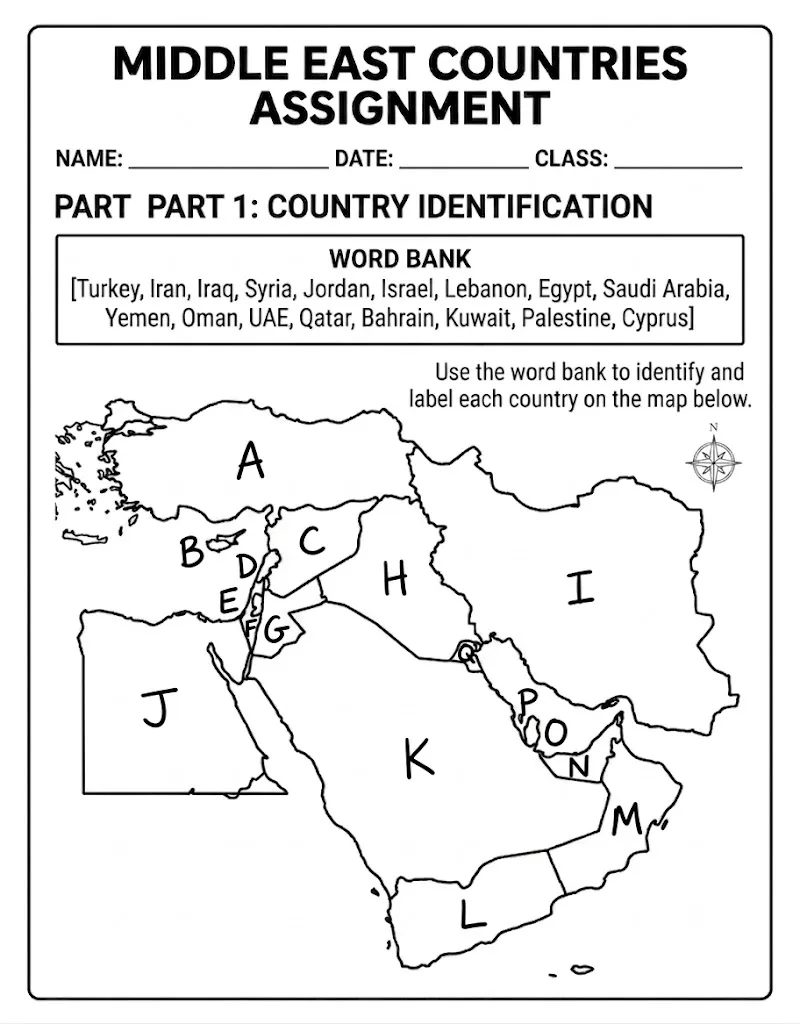
"Dad, you have to teach me"
A few weeks later, Tim reached out to me about his daughter, Julia. Julia called home sick from school. As soon as Tim picked her up, she admitted the truth. "I'm not actually sick," she said. "I was just going to fail my geography test." When they got home, Julia looked at him and said, "Dad, you have to teach me."
Tim is a designer. He'd spent his career thinking about how people interact with technology, not how seventh graders memorize the countries of the Middle East. "I don't know how to teach geography," he admitted. But he did remember a discussion with me about how to ask ChatGPT to be a tutor.
“Dad, you have to teach me”
- Help depends on someone who already knows the subject
- Tim is a designer — he doesn't know geography
The help she needs isn't in the room.
“Ask ChatGPT to be your geography tutor”
- An hour of labeling maps and recalling countries
- Answers aloud, immediate feedback, practice again
The next day, she aced the test.
A few weeks later, Tim sent me a text. "Julia is trading ChatGPT prompts at lunch." Not answers. Prompts. The same social networks that spread shortcuts can also spread curiosity. Turns out, asking for help can be contagious.
Whether AI becomes a shortcut or a coach depends less on the technology and more on whether students learn how to ask for help.
If this landed, forward it to a teacher or administrator you know.
I work with educators to build small tools for specific people. Each build comes with a video and the thinking behind it.
Sources
- Karabenick, S. A., & Newman, R. S. (2009). Seeking help: Generalizable self-regulatory process and social-cultural barometer. In Contemporary Motivation Research.
- Kestin, G., et al. (2025). AI tutoring outperforms in-class active learning: An RCT introducing a novel AI system for learning. Scientific Reports.
- Roll, I., Aleven, V., McLaren, B. M., & Koedinger, K. R. (2011). Improving students' help-seeking skills using metacognitive feedback in an intelligent tutoring system. Learning and Instruction, 21(2), 267–280.
- Zimmerman, B. J. (2002). Becoming a self-regulated learner: An overview. Theory Into Practice, 41(2), 64–70.