
Adding Rewards to Digital Lessons
The avatar system was perfectly designed. Students didn't care about it at all.
- Client
- Boys & Girls Club
- Sector
- Education, Gamification, Motivation
- My Role
- Research Lead
- Team
- Garrett Hedman, Meredith Wilson, Christine Zanchi, Elysa Greenberger
We worked at the Boys & Girls Club to look at how we could better motivate students during lessons. How might we add rewards and framing to add "weight" to questions and help students feel like they are achieving.
Like other educational software, our client wanted an avatar and collection system to motivate students. Our early research showed that students cared more about rewards more closely tied to their academic achievements, and these avatar rewards did not tie into their hard work.
While the client was originally planning on making a complex avatar system our research guided them to instead focus on local rewards immediately after questions and to implement try-it-again in their lessons so students can form and meet goals.
The problem wasn't a lack of rewards. It was that the rewards were pointing at the wrong thing.
What Actually Worked
Acknowledgment Over Prizes
Students cared far more about rewards tied directly to their academic achievements than about cosmetic prizes. A simple checkbox or star representing "I got this right" was more motivating than a new avatar outfit. The reward had to mean something about the student's competency — not just their participation.
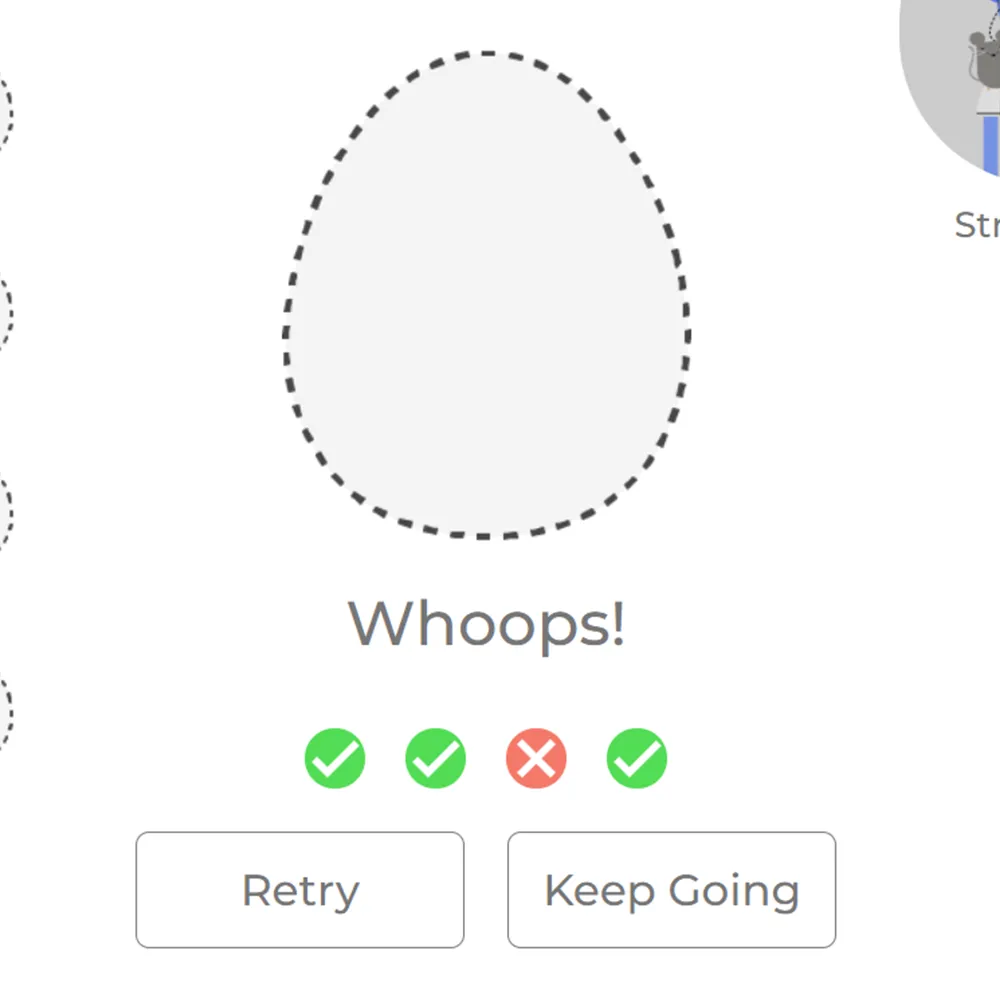
We found filling in stars or checkboxes after answering four questions right in a row was much more motivating and allowed students to form goals around the rewards. The checkboxes represented competency, something students cared deeply about.
Deci's model of intrinsic motivation explains why: rewards that support feelings of competence increase internal motivation. Rewards that feel like external payments undermine it.

Immediate Rewards, Not End-of-Lesson Prizes
Prizes and rewards were given at the end of the lesson. This was too far in advance for a student to set goals or recognize they are missing their goal. Consequentially, these end-of-lesson rewards did not improve effort or retention.
Since students didn't think in probability or the long term, we made rewards occur immediately after each question. These local rewards made answering the question much more important and failure clearer. These local rewards also gave students more reason to celebrate when answering a challenging problem.
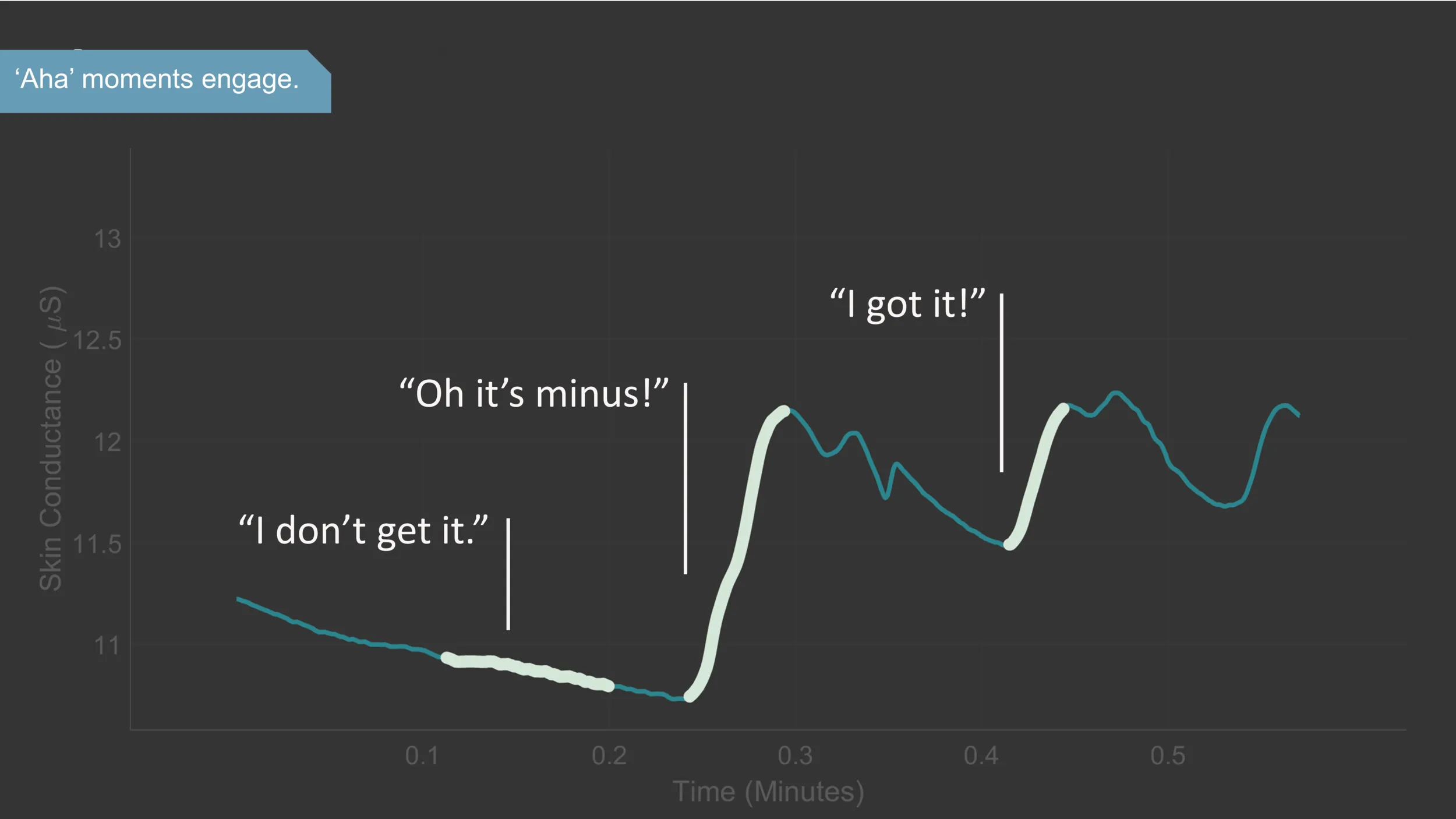
Typical online lessons move on if a child gets a problem wrong. After moving on once or twice, students stopped paying attention and caring if they got a problem right. When we added "weight" to problems with strong rewards, children cared deeply about being able to show they got it right.
When rewards came at the end of the lesson, students didn't try harder to earn them. The gap between effort and reward was too large. Every question became its own small loop: effort → correct answer → immediate recognition. Students who had been coasting started engaging. The feedback interval was the mechanism.
Try-It-Again Is Non-Negotiable
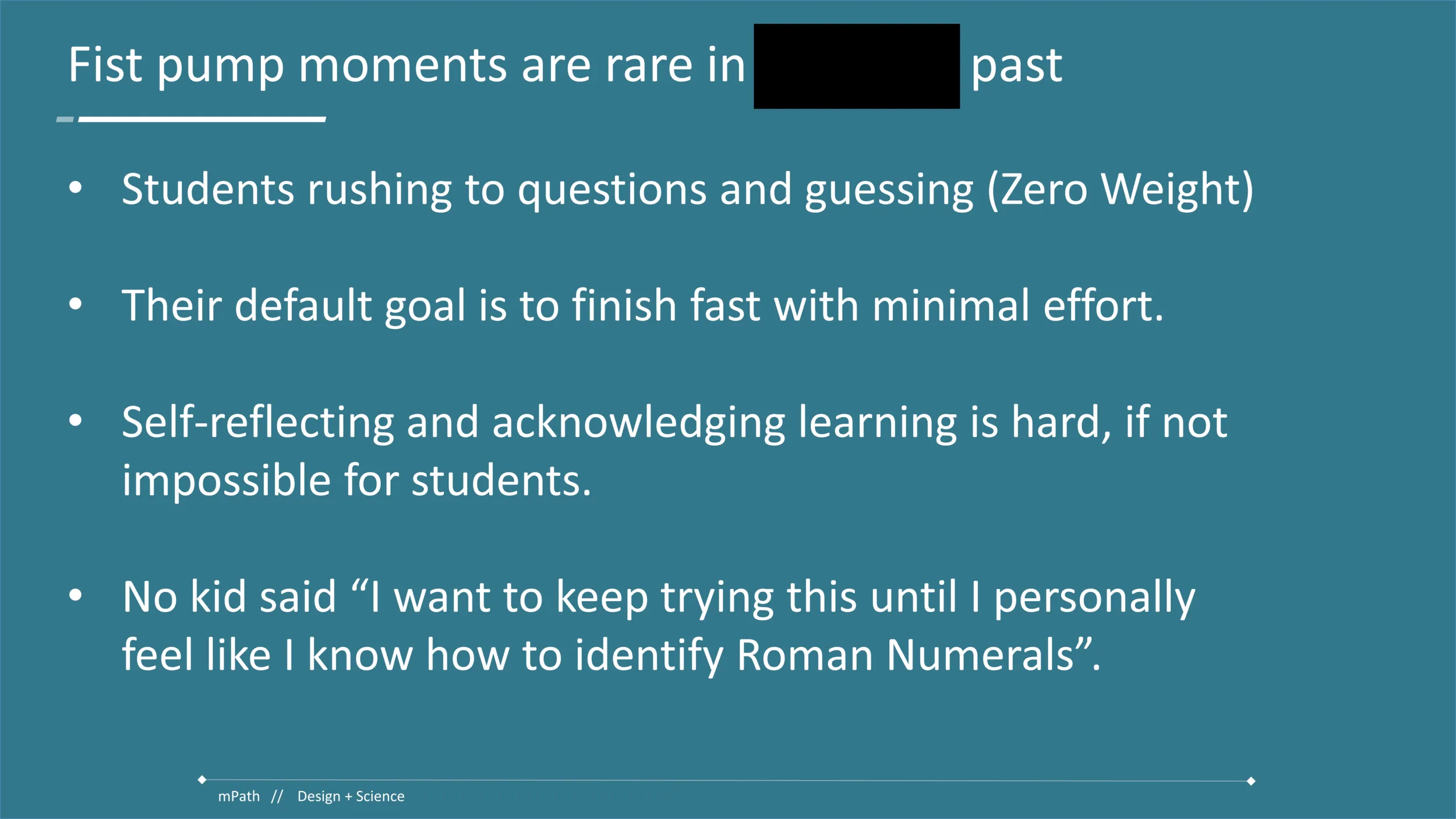
Children are now given as many tries as they needed to get an answer right. This allowed them to fill all the checkbox rewards and achieve their goals. I'd argue, not being able to try-again is the number one demotivator in most online learning content.
One child got a problem wrong and cleared the entire internet data cache rather than have to continue with an incorrect mark floating on his screen. Try-It-Again is so important.
By the time our prototype was finished, students were lining up and asking to play again our roman numeral lessons.
""Students cared more about rewards more closely tied to their academic achievements than about cosmetic rewards.""
The Underlying Framework
This aligns closely with Deci's self-determination theory: intrinsic motivation requires feelings of competence, autonomy, and relatedness. Avatar collection systems fail on all three counts. Immediate academic acknowledgment + the freedom to retry + seeing your own progress against real content hits all three. The reward system that works isn't designed around prizes — it's designed around the feeling of getting better at something.
Instead of implementing the complex avatar system, the client moved toward immediate question-level rewards and a try-again feature. Students who had previously moved through lessons passively were now engaged enough to ask for more.
The lesson for edtech: the question isn't "what should we give students?" It's "what do students feel when they get something right?" Design toward that feeling, and the reward takes care of itself.
The best reward is the feeling of getting smarter. Design backward from there.
If this landed, forward it to someone building learning products for kids.
New essays on AI, education, and building things that matter.